
Various alternative materials, including sulfur and organic compounds, have attempted to replace lithium-ion batteries but have thus far fallen short. Organic batteries, comprising abundant elements like carbon, oxygen, and nitrogen, were expected to offer a more economical solution, yet have proved challenging to develop effectively.
However, a startup named XL Batteries presents a promising new approach. Co-founder and CEO Tom Sisto claims their organic battery technology promises to be cheaper, safer, and more enduring than existing options, including lithium-ion batteries. Rather than focusing on electric vehicles, which require lightweight components, XL Batteries is concentrating on grid-scale energy storage, where size and weight are less critical.
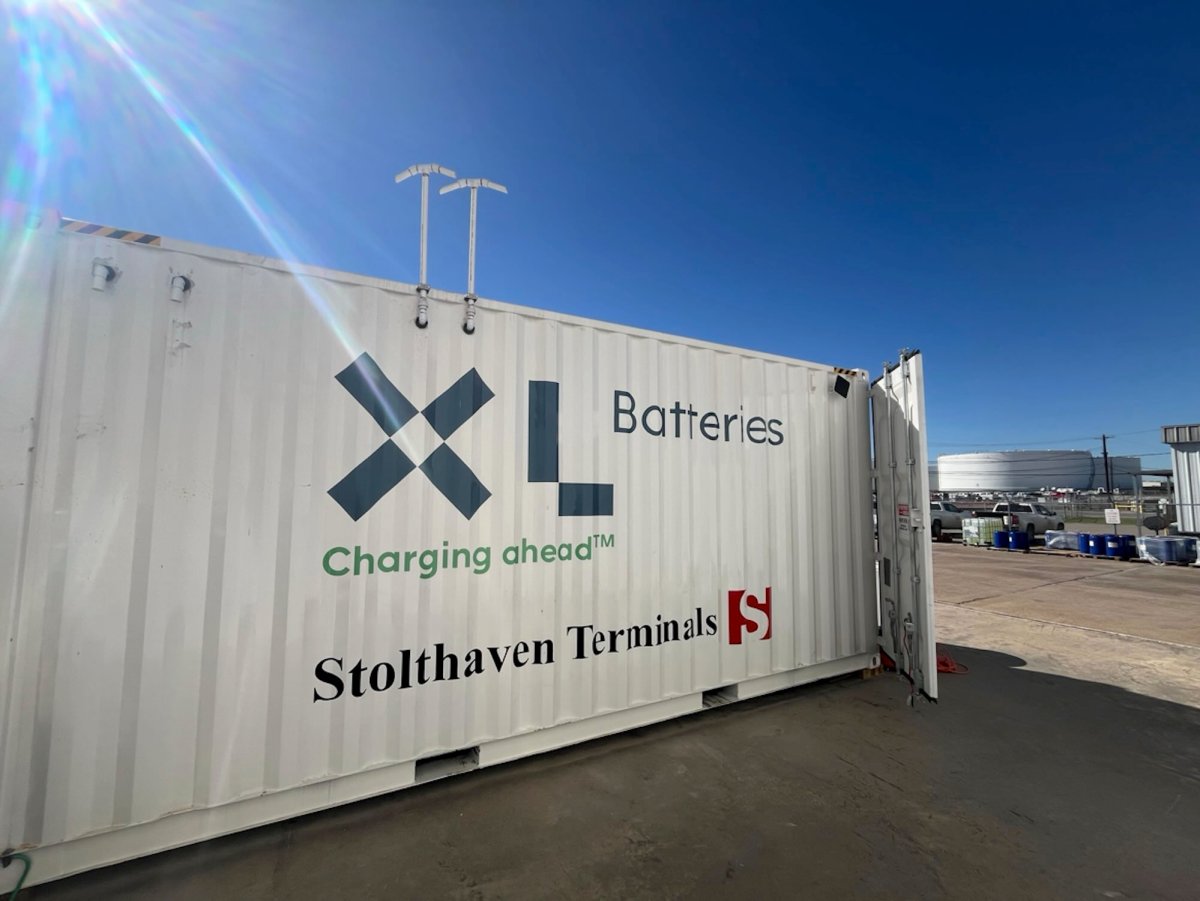
The company has initiated a collaboration with Stolthaven Terminals, a petrochemical storage firm, to demonstrate their technology. The first unit is expected to be modest in size, but once operational, XL Batteries aims to construct much larger systems efficiently. A unique aspect of their design involves utilizing a storage tank as a critical battery component. For instance, if they were to use two of Stolthaven’s largest tanks, it could create a 700 megawatt-hour battery capable of supplying energy to around 25,000 homes for a day.
XL Batteries utilises flow battery technology, which involves two tanks connected by pumps that circulate fluids across a membrane. This method allows for energy storage through the movement of ions. Although flow batteries date back to the 1800s, their considerable size and lower energy density hindered their widespread adoption. While advances have been made in recent years, existing models remain costly due to corrosive fluids that necessitate expensive materials.
The challenge posed by organic batteries has stemmed from the tendency of many organic molecules to degrade when charged. In his research at Columbia University, Sisto discovered a groundbreaking organic compound capable of hosting a significant number of electrons without the need for flammable solvents, leading to its stabilisation in pH-neutral water. This breakthrough formed the foundation for XL Batteries’ technology.
XL Batteries’ system design comprises a 40-foot shipping container and two tanks, allowing for flexible scaling of battery capacity. The shipping container houses the proprietary membrane and other components, while tank size determines energy capacity. The deployment of readily available technology positions XL Batteries to rapidly develop larger battery systems.
In addition to projects with clients like Stolthaven, XL Batteries is keen to expand partnerships with independent power producers, focusing particularly on markets in Texas, where grid-scale energy solutions are in rising demand. Sisto expresses confidence in the economic viability of their projects, suggesting that their technology could play a substantial role in the future landscape of energy storage.
Fanpage: TechArena.au
Watch more about AI – Artificial Intelligence
