
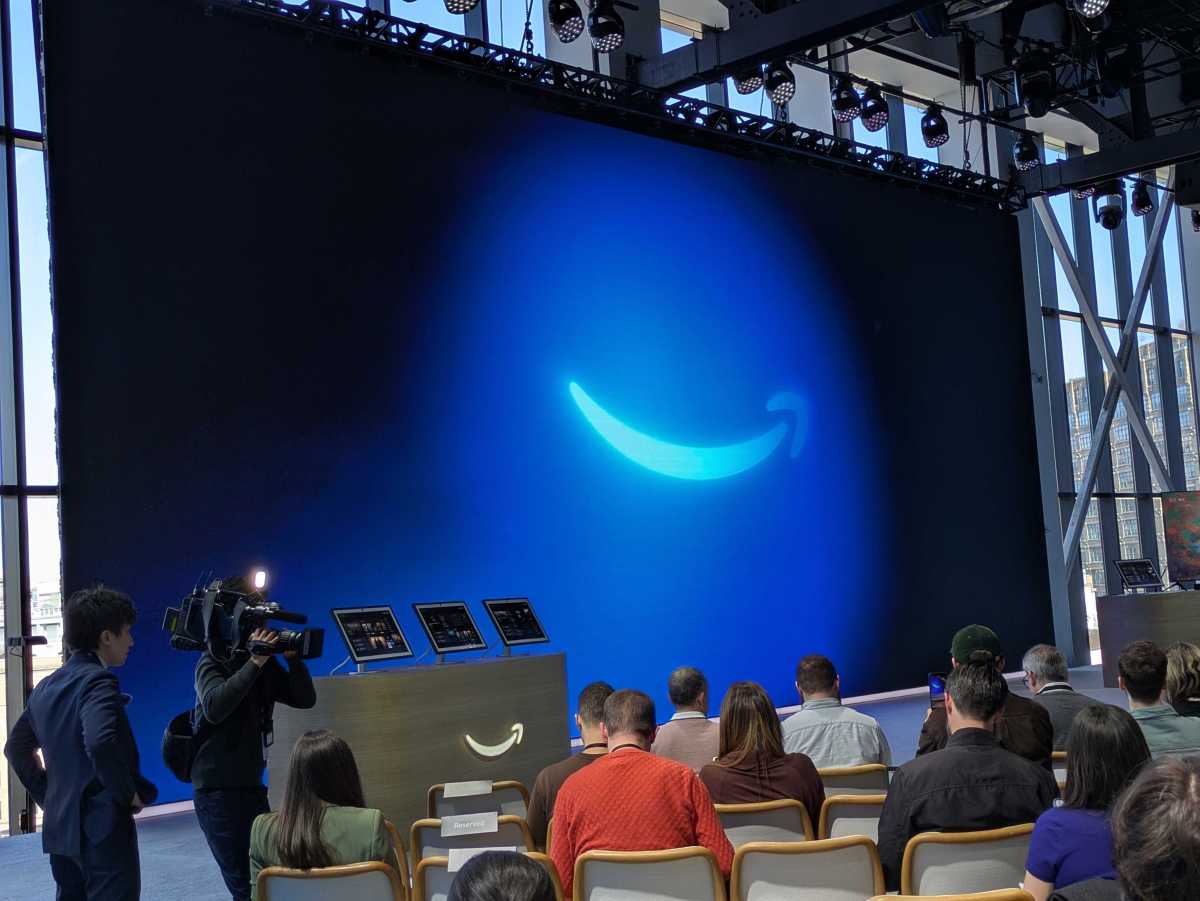
On Wednesday, Amazon unveiled a compelling vision for an “agentic” future, showcasing its enhanced Alexa, dubbed Alexa+, which promises to manage a variety of everyday tasks, from booking restaurant reservations to locating appliance repair services.
Should Amazon realize this vision, it would be at the forefront of offering a holistic, consumer-centric agent tool. The company aims to blend a more expressive and natural version of Alexa, powered by generative AI models, with the capability to autonomously utilize first- and third-party applications, services, and platforms.
“We are firm believers in a future populated by agents — this belief has been persistent for us,” stated Daniel Rausch, VP of Amazon Alexa and Echo, during a keynote presentation on Wednesday. “Numerous AI agents will be working on behalf of customers, many equipped with specialized skills. Moreover, we have always envisioned a landscape in which these agents can interact with one another seamlessly, enhancing the customer experience.”
This development could mark a significant turnaround for a tech giant that has struggled to keep its aging assistant relevant. Amazon has poured substantial investments into Alexa over the years, yet the financial returns have been minimal; reports suggest that the company’s hardware segment has sustained billions in losses.
Agents — a term that continues to evolve, referring to AI systems capable of performing actions on a user’s behalf — are recognized as the next major advancement in AI. The tech industry views agents as crucial for capitalizing on increasingly advanced models, promising to alleviate mundane tasks and bolster overall productivity for both individuals and businesses.
However, this is merely the theory; the practical applications of agents so far have largely fallen short of expectations.
Leading AI labs such as Anthropic and OpenAI have introduced agents capable of controlling web browsers for various tasks. Nonetheless, these agents frequently encounter errors and often necessitate considerable user intervention for more complex operations. Other ambitious projects, like Google’s Project Mariner, remain in the prototype phase, without definitive release timelines.
Amazon’s demonstrations of Alexa+, set to enter a preview phase next month, illustrated a more refined agentic experience, showcasing fewer technical hurdles. The company displayed how the assistant can gather information from multiple sources, including emails, calendars, and stored preferences, to assist with daily chores.
During a preview event in New York on Wednesday morning, Amazon showcased Alexa+ creating a grocery list before ordering items from Amazon Fresh, Whole Foods, and other local grocery stores. In another demonstration, Alexa+ was shown to automatically make purchases on Amazon when items go on sale and to reserve spa and fitness appointments via the wellness app Vagaro.
The capabilities of Alexa+ extend even further, according to Amazon. The assistant can place food delivery orders through GrubHub, hail an Uber, obtain concert tickets on Ticketmaster, compile travel itineraries using resources like Tripadvisor, and extract key dates from event flyers to set reminders.
Too good to be true?
All of this is certainly exciting — and ambitious. Given Amazon’s extensive data on shopper behavior and established partnerships with major tech services, it appears the company might be well-equipped for success. Users of Alexa+ who are willing to share their data could enjoy a more personalized agent experience. Notably, Alexa+ will be available for free to Prime members, usually priced at $19.99 per month, indicating a strategic move to engage Amazon’s most loyal user base.
Additionally, Amazon is banking on its vast Alexa user base — boasting over 600 million devices — to catalyze the adoption of Alexa+. With Alexa-compatible speakers already in many households, the company hopes that embracing Alexa+ will be an easy choice for users.
One of Amazon’s greatest challenges may be addressing the current limitations of AI technology. Reports indicate that Alexa+ has faced multiple delays due to erratic model performance; prior iterations struggled to answer questions accurately and had difficulties with basic tasks like controlling smart lights.
It’s worth noting that competitors’ early attempts at creating agentic tools have encountered significant hurdles as well. For instance, ChatGPT deep research, OpenAI’s agentic model for generating research reports, is known to exhibit “hallucinations,” while Google’s Gemini chatbot sometimes produces inaccurate summaries of emails.
At Wednesday’s press event, it was challenging to gauge the true performance of Alexa+. Most demos were meticulously orchestrated, and attendees were not permitted to extensively test the new assistant.
Ultimately, we will need to experience Alexa+ firsthand to determine whether it can meet Amazon’s ambitious claims. If it succeeds, it would represent a remarkable achievement and potentially position Amazon at the forefront of the consumer agent market.
Compiled by Techarena.au.
Fanpage: TechArena.au
Watch more about AI – Artificial Intelligence
