

On its premiere date of September 23, 1962, “The Jetsons” introduced viewers to “Rosey the Robot” in its first episode. This episode served as an introduction to the character, detailing how Jane, feeling overwhelmed with chores, decided to hire the robotic housekeeper. Decades later, Rosey continues to symbolize the yet-to-be-realized dream of household robots, even 62 years following her screen debut.
As for 2024, our homes aren’t entirely free from robotic inhabitants. iRobot boasts over 50 million units of Roombas sold, a figure that stands as just a segment of the global market for robotic vacuum cleaners. Robotic devices for lawn mowing and pool cleaning have also seen adoption, albeit not as extensively as their vacuum cleaner counterparts.
The unrealized potential of home robotics isn’t necessarily due to a lack of interest from consumers or manufacturers’ efforts. The real challenges lie within cost, functionality, and performance. Beyond the common tasks they are designed for, today’s robots often fall short in performance or are too costly to develop for widespread use, excluding those with substantial financial resources.
Vacuums as Ideal Domestic Robots
Colin Angle, co-founder and long-time CEO of iRobot, once humorously remarked that he didn’t achieve success as a roboticist until he turned to selling vacuums. This comment sheds light on a deeper truth within the robotics field. Prior to the Roomba, iRobot dabbled in varied projects, including military gear and children’s toys.
iRobot struck gold by concentrating on a straightforward task: floor cleaning. The initial Roomba models, although basic compared to current offerings, performed sufficiently to justify their cost. Notably, next month marks not only 62 years since Rosey’s television appearance but also the 22nd anniversary of the Roomba, which is now old enough to purchase a case of Sam Adams legally.
In the decades since Roomba’s introduction, iRobot has dedicated a significant portion of its research and development to enhance the device with smarter technology, including AI, mapping capabilities, and integration with smart home systems. Despite venturing into other robotics areas like gutter cleaning and pool maintenance, none have replicated Roomba’s success.
Balancing Work and Home with Robotics
At a robotics panel I was part of, a lady immediately asked about a billion-dollar idea post-discussion: a drone capable of vacuuming, dusting, and laundry. Acknowledging it as a brilliant innovation, I mentioned I’d be first in line to purchase such a gadget if she brought it to market.
Realizing concepts in robotics, however, is easier said than done. It’s not that the idea for a multitasking domestic drone had never been conceived; it was the daunting challenge of creating a viable, affordable version on a large scale.
These reflections were fresh in my mind when Tesla hinted at its robot through a dance performance. Elon Musk envisions a humanoid capable of factory labor, shopping for groceries, and meal preparation, yet time will tell the feasibility of such timelines.
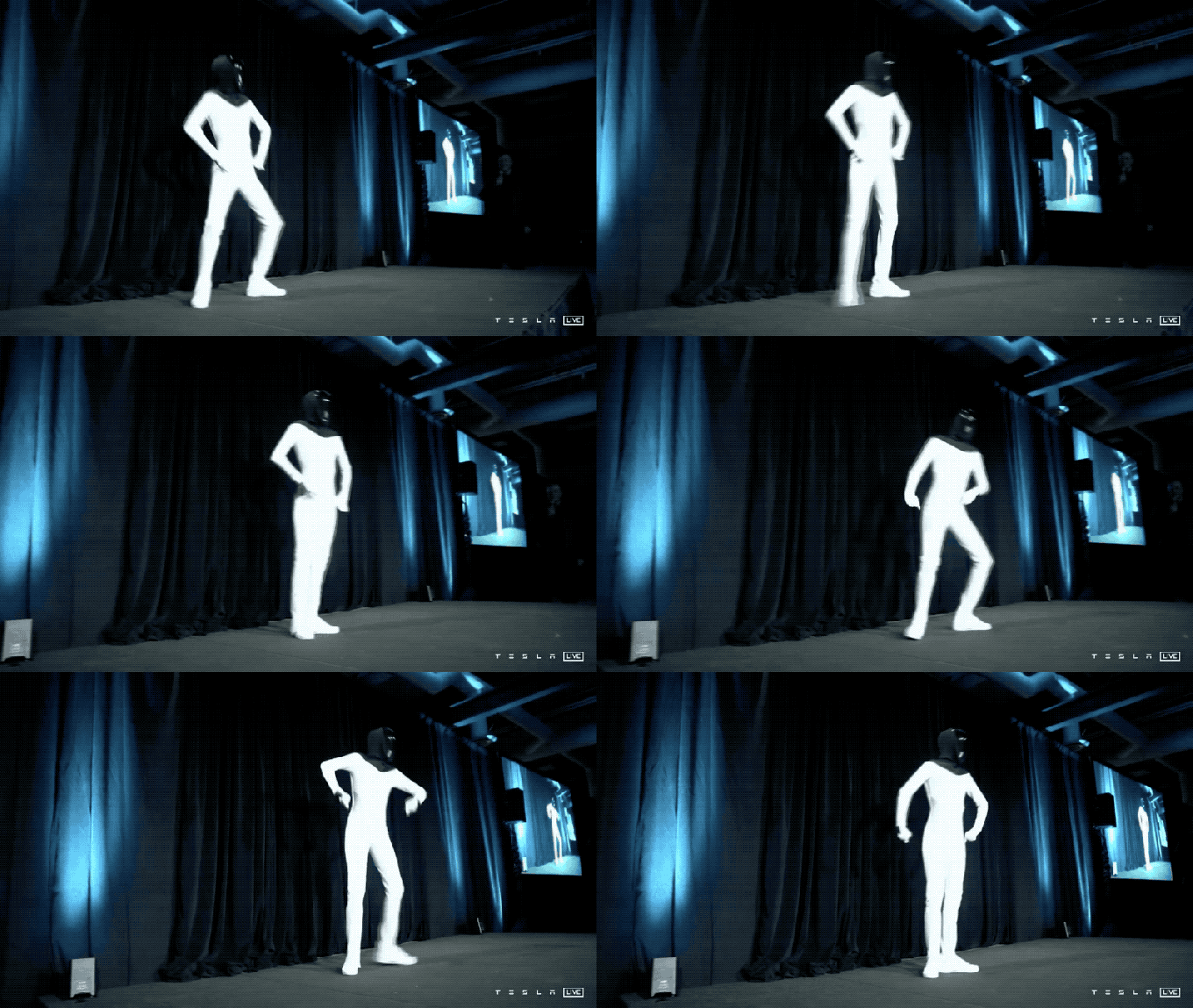
Before the advent of sophisticated robots like Rosey, simpler machines need to set the precedent. Robots have been integral to manufacturing, performing specific tasks with precision for years. As machinery grows more complex, so does its cost and likelihood of malfunctions. Consider the various issues a Roomba might face, then amplify that with the intricacies of humanoid robots.
Experts anticipate the first wave of home robots will fulfill straightforward roles, such as social interaction, caregiving, and domestic chores, each designed with a specific function or two in mind.
Paving the Way for Future Robotics
There is a palpable sense of disappointment that home automation technologies haven’t progressed as anticipated. Yet it’s important to recognize the extensive groundwork already laid in this arena. Future advancements in home robotics will undoubtedly stand on the shoulders of preceding innovations as well as ongoing research efforts.
Contemporary home robots, like Hello Robot, exemplify this ongoing groundwork. With its simplistic design, it serves more as a development tool than a market-ready product. Still, initiatives like these continue to tackle the challenges of mapping, manipulation, and navigation within the domestic environment.
The Challenges of Social Home Robots
The year 2019 was challenging for social home robots, with Anki, Kuri, and Jibo facing shutdowns due to issues with pricing, functionality, and reliability. Amazon’s Astro, despite its ambitious launch, has also struggled, hampered by larger companywide cutbacks, showing that even giants can falter in this demanding sector.
Amidst lukewarm responses to products like Vision Pro, speculations about Apple’s venture into home robotics have surfaced, suggesting a departure towards more practical, tablet-like interfaces for future projects.
The journey towards having robots in our homes is ongoing, with much ground still to cover. However, the dream of bringing home a robot like Rosey might have to wait until 2062, giving us sufficient time to perfect these technologies.
Compiled by Techarena.au.
Fanpage: TechArena.au
Watch more about AI – Artificial Intelligence

