
A British space venture has disclosed its strategy to deploy its debut satellite via SpaceX’s rideshare initiative, signaling the advent of what the company describes as a “new era of space exploration.” This approach entails gathering, curating, and marketing astronomical data “as a service.”
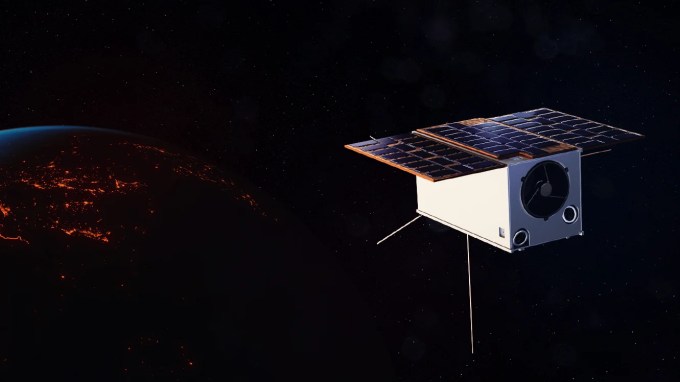
Echoing the nature of past endeavors, SpaceX’s Transporter 15 venture, slated for next year, will employ a Falcon 9 rocket to carry payloads for various entities into orbit. This includes London’s Blue Skies Space, which has announced the forthcoming launch of its Mauve satellite in October 2025 as part of this mission.
This satellite aims to supplement the insights gained from existing space endeavors, like the renowned Hubble Telescope, focusing on stellar spectroscopy. This method analyzes the spectrum of light from stars to deduce characteristics such as composition, temperature, density, mass, distance, brightness, and more.
“Mauve’s mission is to conduct extended observation campaigns of numerous stars within our galaxy, aiding the scientific community in advancing significant stellar research,” explained Marcell Tessenyi, CEO and co-founder of Blue Skies Space, in a discussion with TechCrunch.
The scientific objectives include studying stellar flares to understand their occurrence, energy spectrum, and physical attributes; additionally, it aims to investigate the magnetic activities of stars hosting exoplanets to determine the impact of UV radiation on photochemistry.
While other private entities have monetized space data, primarily through ground-based telescopes or Earth-observing satellites, Blue Skies differentiates itself by harvesting and facilitating access to space data from space itself, using a subscription service. This innovative model has already attracted early subscribers such as Boston University and the National Astronomical Observatory of Japan, who joined before the launch to influence the program’s design, including deciding the satellite’s observational focuses and durations.
“We are set to be the pioneers in offering astronomical data as a service,” stated Tessenyi. “This initiative brings fresh satellite-driven datasets to the community, accessible to all interested parties. It marks a significant shift towards empowering the scientific community with more flexibility, complementing the capabilities of large government-funded infrastructures.”
Since its founding, the company has garnered approximately $6.5 million, with a notable portion from equity investments by entities such as the U.K.’s SFC Capital and Sparx Group in Japan. The rest has been secured through grants, including contributions from Europe’s Horizon R&D program.
Pioneering the Space Economy
Established in 2014 by a group of academics, including Tessenyi, who holds a doctorate in astrophysics from University College London, Blue Skies Space has navigated the challenging path of establishing itself within the burgeoning private space sector. This “new space” era, marked by the commercial exploitation of space, is creating unprecedented opportunities for enterprises of diverse scopes and sizes.
Tessenyi recounts the years spent engaging with the international scientific community, refining their model, and understanding the data needs of scientists. “The ‘new space’ movement has radically altered the space industry landscape over the past decade, making it possible for us to identify the right manufacturing partners and team members to realize our ambitions,” he remarked.

Opting not to manufacture in-house, Blue Skies entrusted the engineering tasks to seasoned manufacturers such as Hungary’s C3S and the Netherlands-based Isispace, translating scientific needs into technical specifications. This included the development of a 13cm telescope and a UV-visible spectrometer.
Simultaneously, Blue Skies is advancing a second spacecraft named Twinkle, constructed by Airbus, designed to feature a larger telescope and visible-IR spectrometer for in-depth spectroscopic analysis of distant exoplanets’ atmospheres.
Blue Skies has yet to disclose the pricing for its membership, indicating that details will be shared “soon.”
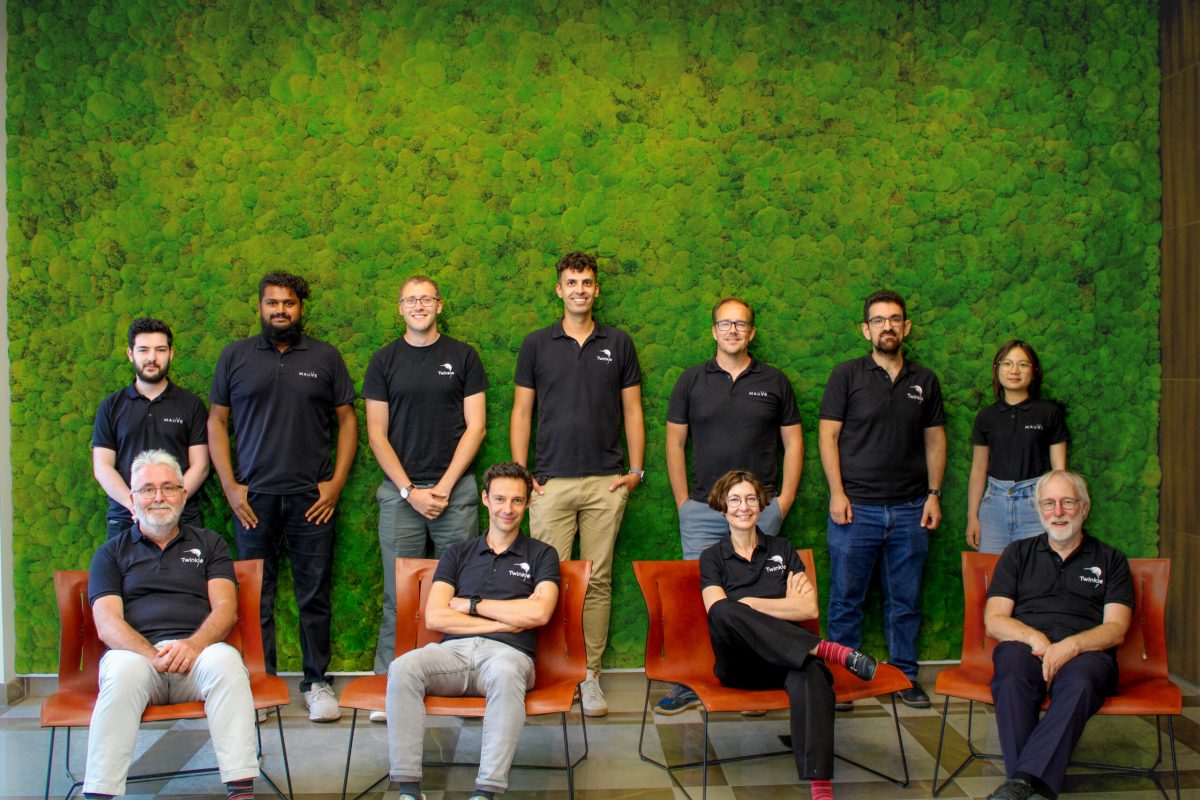
Despite its ambitious satellite project and funding achievements, Blue Skies operates with a lean team of just 12 employees situated in the U.K. and Italy.
Compiled by Techarena.au.
Fanpage: TechArena.au
Watch more about AI – Artificial Intelligence
