
UX and UI designers collaborate closely with engineers during product development to create and implement design ideas and wireframes for effective user interfaces. Continuous communication, feedback, and testing are essential for ensuring a harmonious collaboration that produces a user experience in line with the desired design objectives.
Nick Budden, a seasoned entrepreneur previously engaged as a UI/UX designer, envisioned a work environment where designers could focus exclusively on design tasks without interruptions from handoffs or engineering meetings. To streamline several inefficient aspects of the design workflow, Budden established Phase in 2017.
“The process of implementing UI is costly and time-intensive, requiring the involvement of designers, product managers, and engineers,” Budden stated in an exclusive conversation with TechCrunch. “Moreover, thorough user testing is postponed until the implementation is finalized.”
The startup, with operations in Taipei and Berlin, is developing a no-code platform aimed at assisting UI/UX designers in crafting fully interactive prototypes. As of Thursday, it announced that it has secured $13 million in funding from various investors, including Gobi Partners, Hive Ventures, New Economy Ventures, Palm Drive Capital, Shilling VC, SquareOne, WI Harper, 42CAP, and 500 Global.
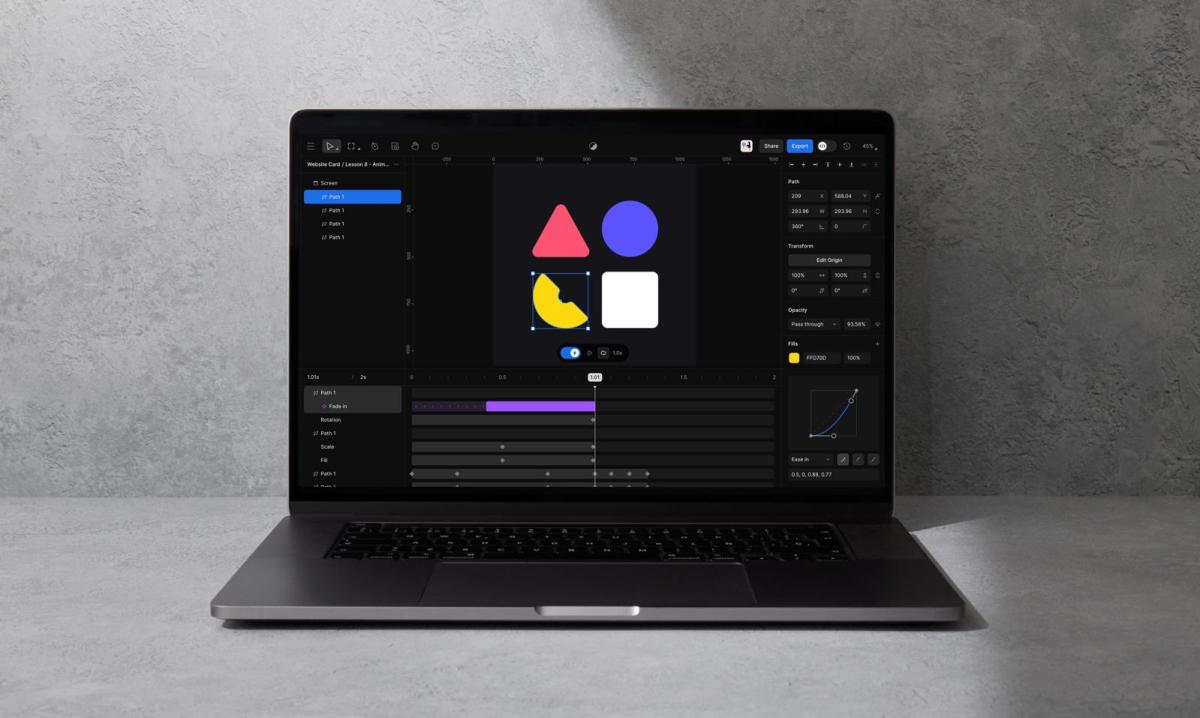
Recently, the startup unveiled its initial product: a UI animation tool designed to compete with Adobe After Effects and Figma. Phase claims that its software enables UI/UX and product designers to produce interactive simulations of websites or apps “without manual coding or reliance on error-prone AI plugins.” Additionally, it can generate production-ready UI code, enhancing the design workflow.
Budden emphasized that Phase’s product is significantly simpler for UI/UX designers compared to tools like Adobe After Effects or Figma. “The main distinguishing factor compared to Figma is the completeness of the prototype. In Figma, you can create a prototype that only replicates about 20% to 30% of the actual website’s functionality; the remaining 70% to 80% requires communication with engineers and product managers to sort out,” Budden explained. “Our product is engineered to deliver 100% functionality, reflecting what a real website or app can do.”
According to Budden, this launch marks the beginning of a series of product releases. There are plans to roll out three additional UI design and coding tools for its WYSIWYG (What You See Is What You Get) platform over the coming year to simplify the manual tasks involved in UI/UX design. These features will include advanced UI prototyping, UI design capabilities, and UI code export functionality.
“We don’t consider UI animation to be a long-term stand-alone market; while it’s a viable entry point now, that opportunity will diminish as tools like Figma incorporate animation features directly,” stated Phase’s CEO in the interview with TechCrunch. “Our approach is to initially establish ourselves in the animation sector and subsequently move towards larger markets before that transition occurs.”
Soft Launch in South Korea
Phase initially launched its platform in South Korea in May, having secured a reliable local partner to facilitate the rollout.
Budden noted that the uptake of new tools among designers is largely influenced by their peers’ discussions and implementations, fostering widespread acceptance of design resources. However, he pointed out that this influence tends to be very “hyper-local.” For instance, designers in London are primarily swayed by local trends.
“Due to this local dynamic, we opted for a region-by-region launch strategy, allowing us to deeply engage with each design community and foster growth,” Budden explained.
In South Korea, there are approximately 100,000 designers, and Phase reports that within just a few weeks of its product launch, over 10,000 designers had tried it out. This hands-on strategy effectively stimulated community growth in South Korea; however, it has not translated as successfully in other markets.
“Larger markets had more fragmented design communities, making it challenging to establish traction. After several months of attempting to replicate our success in Korea, we adapted our approach and initiated a global beta,” the CEO of Phase shared. “With adjustments to our go-to-market plan, we experienced swift and sustainable growth … This momentum, coupled with product stabilization, is why we are transitioning out of beta now.”
Phase is now targeting entry into the U.S. and European markets as its next priority.
Compiled by Techarena.au.
Fanpage: TechArena.au
Watch more about AI – Artificial Intelligence
