
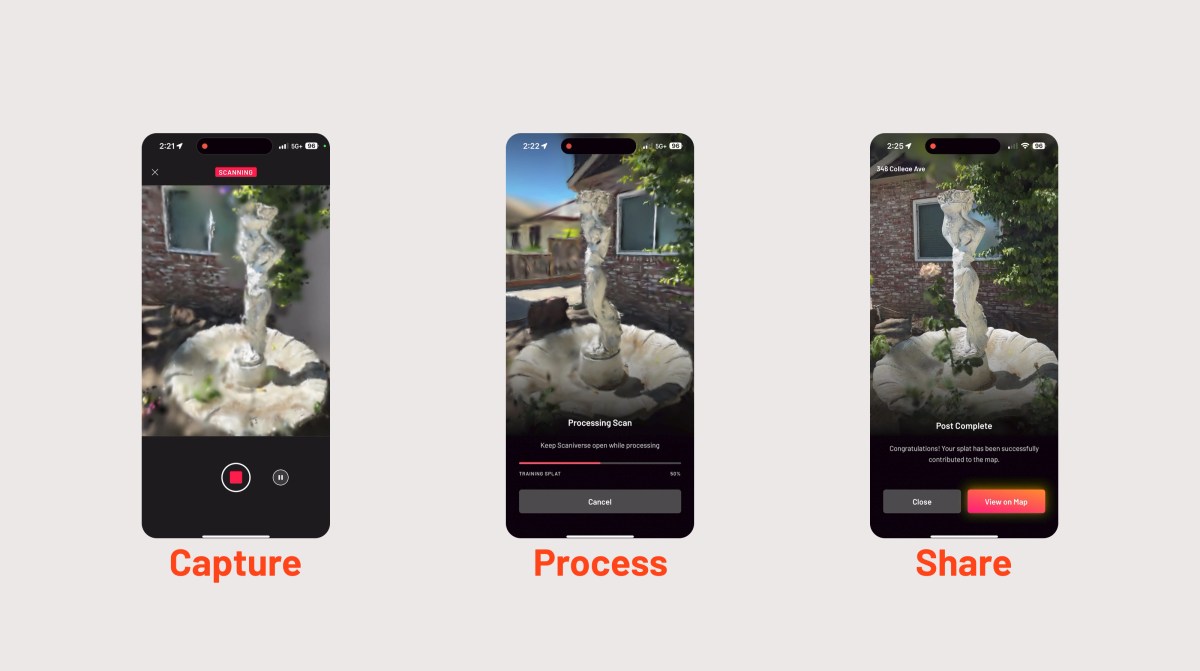
Niantic has unveiled an updated version of its Scaniverse application, enhancing the ability for users to intricately capture their surroundings. The latest iteration, Scaniverse 4, introduces the capability to create three-dimensional captures of places and objects utilizing a Gaussian splatting approach. This method offers a more comprehensive data collection on objects, enabling sharper and speedier visual representations.
Since acquiring Scaniverse in 2021, Niantic has rolled out significant updates, marking a new milestone for the app. Previously, the app facilitated scanning and storage of spatial data on a local device or allowed sharing with peers. The innovative scanning techniques introduced permit the placement of these scans, enriched with geographic data, onto a map for broader discovery, enhancing accuracy and detail in the representation of new locales.
Over the years, Niantic has been ambitious in creating a detailed 3D world map, encouraging players from its array of games like Wayfarer, Ingress, and Pokémon GO to perform scans of different locations in exchange for game-based rewards. These collected scans have been instrumental in generating splats globally.
This new method of scanning, initially exclusive to iOS devices, simplifies the process significantly. Users can initiate scanning through a fresh capture menu, and by encircling the object to gather various viewpoints, akin to video recording. Following the scan, the app processes the imagery, allowing users to anchor the splat on a geographical map, or to share the model or video. Niantic highlights that a scan duration between one to three minutes is sufficient for a high-quality output.
For privacy safeguards, Niantic proactively blurs identifiable features such as faces and license plates in the scans. Moreover, any moving entities within the scanning process are discreetly blended into the final product to maintain privacy and integrity.
Brian McClendon, the Vice President of Engineering at Niantic and a pivotal figure in the creation of Google Earth, shared insights with TechCrunch regarding the transition from “triangle meshes” to Gaussian splatting in the latest Scaniverse version. This transition promises a leap in visual quality, offering enhanced lighting and reflection effects even from similar data inputs.
McClendon emphasized the substantial benefits of Gaussian splats over triangle meshes, highlighting their speedier processing and remarkably lifelike results that capture intricate details such as transparency, reflections, and the texture of natural elements. “The distinction,” he remarked, “is akin to comparing the construct of LEGO pieces to the malleability of clay, where the latter achieves smoother contours and intricate detailing.”
Niantic plans to enrich the developer toolkit further with this advanced scanning technology combined with its visual positioning system (VPS), offering a wealth of detailed world data. The company envisions Scaniverse’s user base, largely consisting of XR content creators and 3D photography aficionados, playing a crucial role in crafting an evolved visual map.
Having already amassed hundreds of thousands of scans utilizing Gaussian splatting, Niantic aims to amplify this collection into the millions, intending to empower developers with material for a variety of applications, including gaming and virtual reality adventures.
Furthermore, the assimilation of these scans will augment the realism in Niantic’s own games, allowing virtual entities to interact more believably with the real world.
Compiled by Techarena.au.
Fanpage: TechArena.au
Watch more about AI – Artificial Intelligence
