
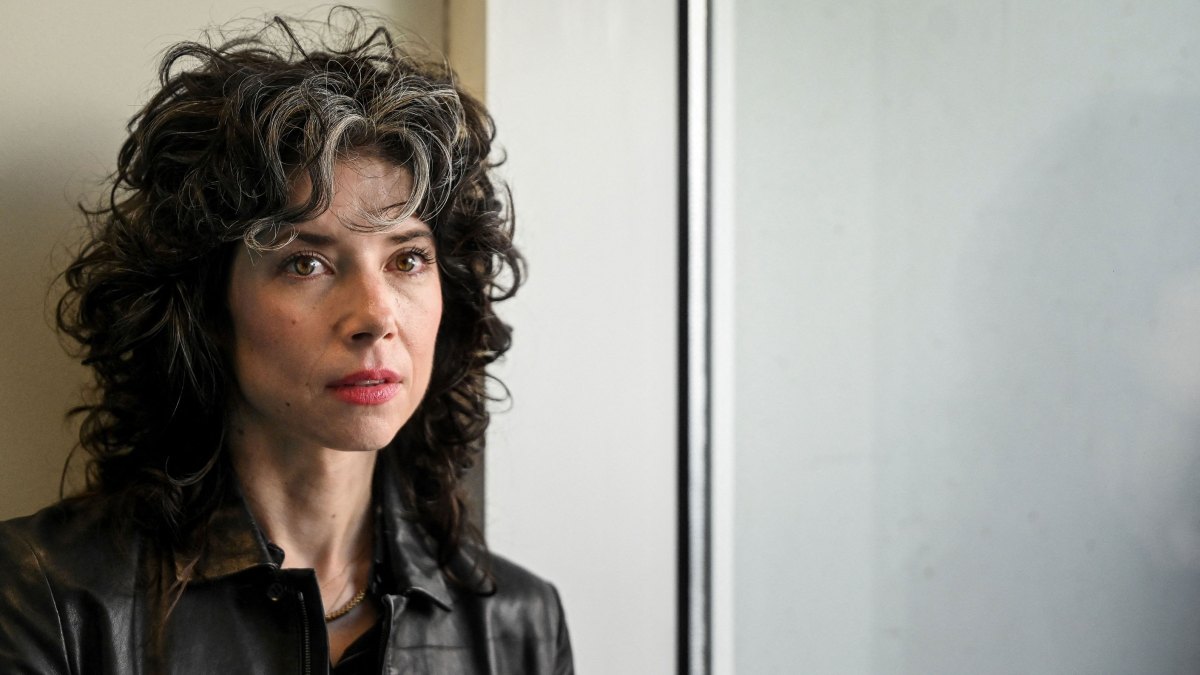
The tech industry’s “frat house” mentality has thoroughly exasperated Meredith Whittaker, the head of Signal. During our insightful interview at VivaTech in Paris, we touched upon grave societal challenges like misinformation, AI dominance, and the looming surveillance state. Our exchange also covered Signal’s interactions with tech moguls like Elon Musk and Pavel Durov of Telegram, and we even explored Whittaker’s forthright views on OpenAI’s leadership, which she criticizes for their juvenile antics reminiscent of college dorm pranks.
Whittaker expresses deep concerns about the centralized power within the top five social networks, particularly in a pivotal election year globally, emphasizing the risks for the U.S. and European dependence on external U.S. tech behemoths. She disputes the notion that relaxing EU laws would help it stand up against U.S. tech giants or enhance societal benefits, critiquing how media narratives on AI and deepfakes overshadow the role social platforms play in prioritizing engagement through sensationalism over factual accuracy.
The conversation also veered into the realm of surveillance advertising, the U.K.’s contentious Online Safety Bill, and the EU’s CSAM proposals, which she deems as “utterly perilous.” She candidly remarks on Pavel Durov’s preoccupation with his public image over the security of his platform, calling out his hypocrisy.
And, she alludes to her plans of spending an extensive amount of time in Europe in the near future.
With your recent focus on AI power dynamics, especially in the European setting, could you elaborate on your stance?
The crux is, in Europe, the power of AI is predominantly in non-European hands. A select few companies, mainly in the U.S. and China, hold this power. For Europe, this means a heavy reliance on systems and infrastructures that benefit these companies in terms of profit and growth, at a time when the specter of a more authoritarian U.S. government looms, particularly with its eye on the tech sphere.
What’s your take on the debate around accelerating technologies in Europe and the frustrations around EU regulations?
From a scholarly perspective, I find it essential to clarify what is actually meant by overcoming regulatory “shackles” to match the technological heights of U.S. giants— a notion I find misleading. What we need is a comprehensive understanding of “progress,” one that doesn’t reject regulation of technologies that pose profound social and ethical challenges, from mass surveillance to diminishing labor rights.
Your thoughts on AI-generated disinformation, particularly involving figures like Volodymyr Zelensky, seem critical.
My concern is that the hysteria around deepfakes overshadows the broader issue—that of a digital ecosystem dominated by a few platforms that prioritize sensational over accurate content, amplifying misinformation. This, in my view, is the real battlefield of AI-driven disinformation.
In light of global debates on advertising standards, how do you view the regulation of the ad industry to foster healthier digital platforms?
A promising start would be to ban surveillance advertising, tackling the root issue plaguing the tech industry—the pervasive surveillance in service of influence, be it commercial, political, or misinformation.
Regarding the controversy around OpenAI’s use of a voice similar to Scarlett Johansson’s, what’s your perspective?
It’s a clear instance of disrespect and a revealing moment for the culture surrounding some of these AI endeavors, highlighting a lack of earnest leadership in favor of juvenile shenanigans.
With the U.K.’s Online Safety Bill now an Act, what’s your view on its implications for end-to-end encryption?
Signal’s stance is unwavering; we will never compromise on the integrity of our encryption, even if it means exiting the U.K. market. This commitment to privacy is non-negotiable, as the bill introduces demands that fundamentally undermine secure communication.
Turning to the recent conversations about using AI for online safety, what concerns do you have?
My primary concern revolves around age-gating and the potential for comprehensive surveillance it entails. Imposing such verification requirements threatens the privacy of online interactions, harkening back to a time when confidential information like library records were fiercely protected.Your thoughts on the European Commission’s new directive against child sexual abuse material are quite bold.
Despite the lack of political momentum, it’s disconcerting to see the disproportionate influence of the scanning and biometrics industries in drafting such legislation. The solutions proposed, far from being practical, pose a grave risk to privacy and security, undermining the essential technologies we rely on for secure communication.
Lastly, the buzz around decentralized AI, like that proposed by Emad Mostaque—how do you interpret this?
What I see is more of a catchphrase than a substantive proposition. The discourse lacks a detailed explanation of how decentralization would work in practice and its actual benefits.
Reflecting on the dispute with Elon Musk concerning platform security, how has this impacted Signal’s user community?
The controversy, unfortunately, caused unnecessary fear among users — a reckless move by those we were in dispute with. Signal stands by its commitment to privacy, supported by the security community, and continues to address any misinformation with facts and transparency.
The widespread use of Telegram in the ongoing situation in Ukraine has been noted. What’s your viewpoint on its role compared to Signal?
Telegram serves more as a social media platform with messaging features, whereas Signal focuses exclusively on secure private communication. For truly private exchanges, particularly in crisis regions, Signal remains the preferred choice.
Your extended stay in the EU is intriguing. Could you share why?
I’m dedicating the next six months to strengthening Signal’s presence in Europe, a strategic move given the current political climate in the U.S. Additionally, this period serves as an opportunity to pen a book, chronicling two decades of my work in technology and activism.
Compiled by Techarena.au.
Fanpage: TechArena.au
Watch more about AI – Artificial Intelligence
