
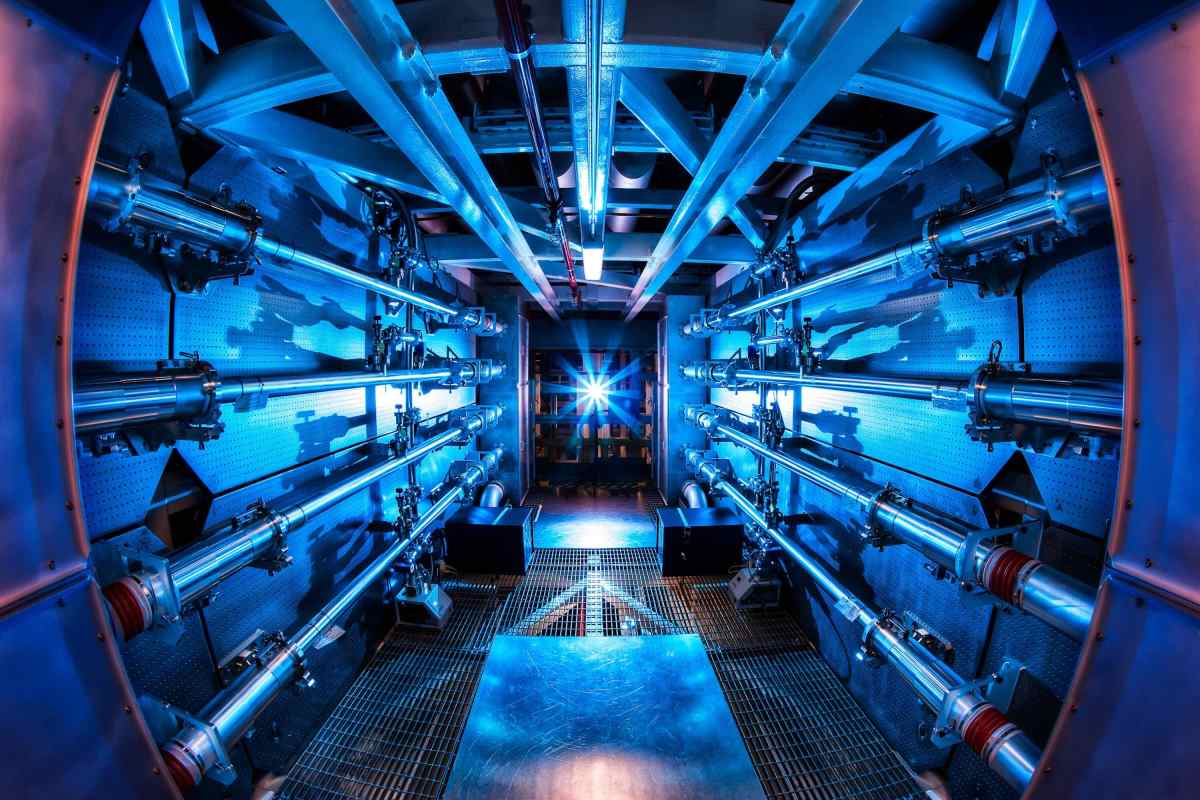
The National Ignition Facility (NIF) of the U.S. Department of Energy is making significant strides in nuclear fusion, as it steadily increases the power output of its experiments. Recently, the facility achieved a yield of 5.2 megajoules, followed by an impressive 8.6 megajoules in subsequent attempts, marking a notable advancement since the pioneering fusion experiment of 2022, which generated 3.15 megajoules — a small improvement over the 2.05 megajoules provided by the lasers to initiate the reaction.
While these results are exciting, it is essential to note that none of the experiments conducted thus far have been capable of contributing electricity back to the energy grid, nor have they been sufficient to offset the facility’s operational energy needs. For instance, the initial net-positive fusion shot required 300 megajoules to power the laser system, emphasising that while NIF has achieved important milestones, it was not originally designed to operate as an energy provider. Nevertheless, these developments serve as evidence that controlled nuclear fusion is becoming a tangible reality rather than remaining merely hypothetical.
The NIF employs an innovative method called inertial confinement to stimulate fusion reactions. This process involves encasing fusion fuel in diamond and placing it within a small gold cylinder known as a hohlraum. The roughly BB-sized pellet is then dropped into a large vacuum chamber, approximately 10 meters in diameter, where 192 high-intensity laser beams converge. The intense laser energy vaporises the hohlraum, releasing X-rays that bombard the fuel pellet. As the diamond coating absorbs energy, it transforms into an expanding plasma, increasing pressure on the deuterium and tritium fuel to the critical point where their nuclei can fuse, resulting in energy release.
In contrast, the other primary approach to achieving fusion is through magnetic confinement, which utilises powerful superconducting magnets to compress and contain plasma in a compact space conducive to fusion. Although no magnetic confinement experiments have achieved net-positive results to date, multiple projects are underway, with hopes of reaching this goal soon.
Additionally, a growing number of startups are exploring inertial confinement techniques, including Xcimer Energy and Focused Energy, contributing to the landscape of fusion energy research.
The ongoing efforts at facilities like NIF underline the significant progress being made in the field of nuclear fusion, pointing towards a future where sustainable energy generation through fusion could become a reality.
Fanpage: TechArena.au
Watch more about AI – Artificial Intelligence
