
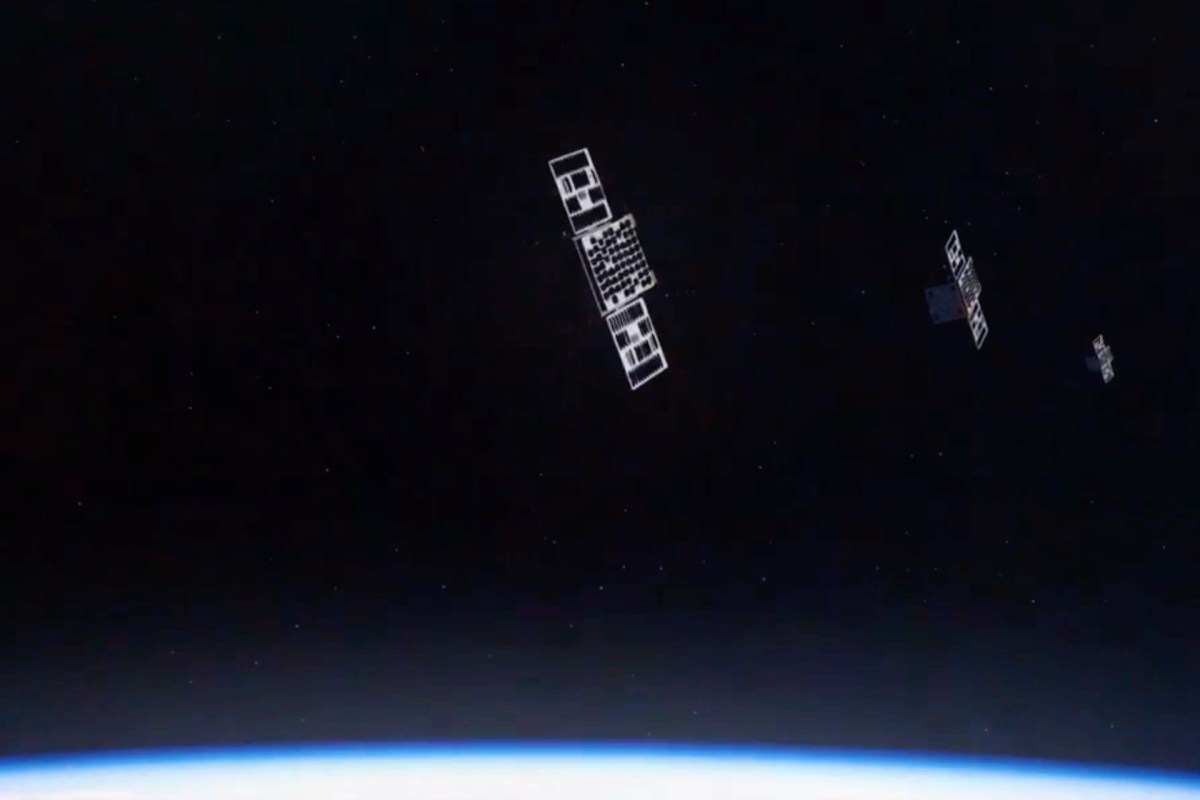
Pixxel, a burgeoning space technology startup from India, has proudly accomplished the launch of its first trio of hyperspectral satellites, part of its commercial satellite constellation named Firefly, aboard a SpaceX rocket from California. This launch signifies a critical advancement in India’s expanding aspirations within the space sector.
India is currently home to approximately 300 space startups and has attracted global attention with several recent achievements, such as the successful landing of its lunar mission at the south pole, the deployment of a coronagraphy spacecraft, and a partnership with NASA to engage in the Artemis Accords. Additionally, India is set to initiate its first human spaceflight mission next year, aims to establish its own space station by 2035, and plans to send an astronaut on a lunar mission by 2040.
This recent launch marks the commencement of commercial activities for the Bengaluru-based Pixxel and occurred at the Vandenberg Space Force Base on Tuesday at approximately 10:45 a.m. PST as part of SpaceX’s Transporter-12 rideshare mission. The demand for hyperspectral satellites is skyrocketing among space organizations as corporations and governments are increasingly interested in monitoring deforestation, ocean pollution, oil spills, and assessing water quality. Although drones can collect some data, satellites generally offer more effective and efficient solutions for these challenges.
The trio of satellites represents the first phase of Pixxel’s commercialization strategy, which will see an additional three satellites launched by the second quarter and aim for a total of 18 to 24 satellites by 2026-2027, as indicated by the company’s executive hours prior to the launch.
“This constellation represents the highest-resolution hyperspectral satellites globally and is the first private commercial constellation of its kind in India,” stated Pixxel co-founder and CEO Awais Ahmed in an interview with TechCrunch.
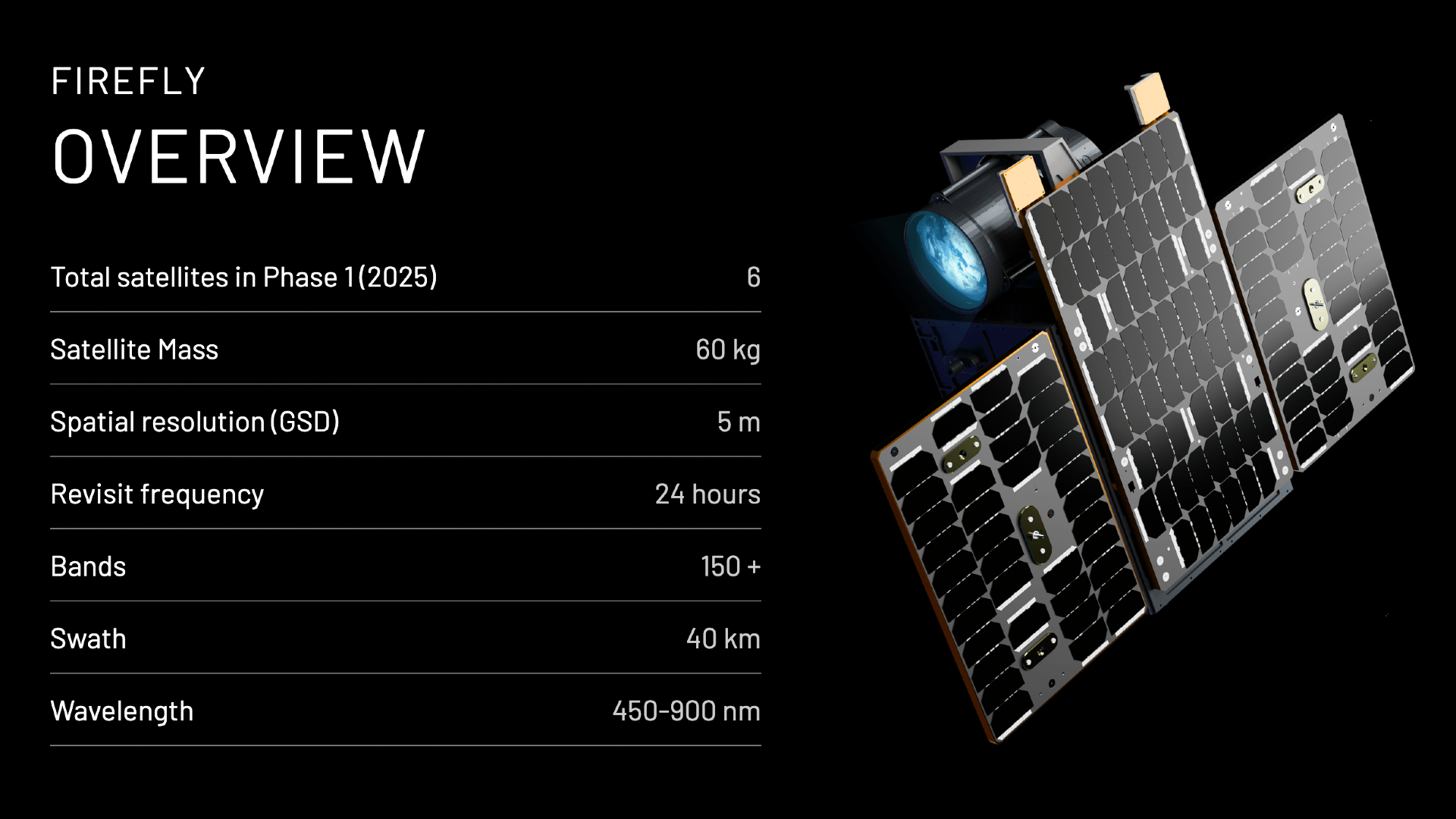
Pixxel’s Firefly satellites are engineered to deliver hyperspectral imagery with a remarkable five-meter resolution across a broad 40-kilometer (approximately 25-mile) swath. These satellites can collect data across more than 150 spectral bands, allowing for the detection of minute changes in chemical compositions, vegetation health, water quality, and atmospheric conditions. The onboard narrowband sensors are designed to identify concealed patterns and anomalies, proving beneficial for agricultural and climate-related applications.
In recent years, the startup has secured over 60 customers, including the Indian agriculture ministry, British Petroleum, and NASA. Some clients are already receiving hyperspectral imagery from demo satellites launched in 2021 and 2022, but the six satellites planned for launch this year promise to deliver significantly more data than the earlier demo models, according to Ahmed.
“It’s akin to hearing a musical note and discerning the keys that compose it; those keys represent what we strive to identify using hyperspectral data,” explained Kshitij Khandelwal, co-founder and CTO of Pixxel, in conversation with TechCrunch.
The satellites will orbit in a sun-synchronous trajectory at approximately 342 miles above the Earth. While the first trio will enable Pixxel to commence commercial activities, they will not achieve daily global coverage, instead providing data every two to three days. According to Pixxel executives, an additional three satellites will be necessary for daily coverage.
These commercial satellites are equipped with native propulsion systems, allowing them to maintain precise orbital positions for up to seven years, in contrast to the shorter lifespan of one and a half to two years of the earlier demo satellites.
Companies such as Esper, Orbital Sidekick, and Wyvern are also competing for market share in this space. However, according to Ahmed, Pixxel currently stands alone in offering true five-meter hyperspectral satellites.
“While others are providing multispectral imagery… they are operating only within eight wavelengths or so. With hyperspectral capabilities, we are able to cover 150 wavelengths at five-meter resolutions, which distinctly differentiates us from the competition,” he asserted.
When asked about the choice of using a SpaceX rocket over an Indian Space Research Organization (ISRO) launch vehicle, Ahmed attributed it to launch timing and the required orbital specifications.
So far, Pixxel has successfully secured $95 million in investments, with notable backers including Accenture Ventures, Google, Lightspeed Venture Partners, and Radical Ventures.
Ahmed shared with TechCrunch that in addition to Google’s investment, Pixxel is looking into potential integrations of its hyperspectral satellite analytics with Google Earth and other Google platforms and services.
Just last year, India announced a venture capital fund of $116 million dedicated to advancements in space technology. The nation has also introduced a specific space policy and revised its foreign direct investment regulations for overseas investments in the space sector, aiming to enhance its presence in the global space industry.
Compiled by Techarena.au.
Fanpage: TechArena.au
Watch more about AI – Artificial Intelligence
