

On Thursday, Brett Adcock, the founder and CEO of Figure, unveiled an innovative machine learning model tailored for humanoid robots. This announcement comes two weeks after Adcock disclosed the company’s decision to discontinue its collaboration with OpenAI, and it focuses on their latest creation, Helix—a “generalist” Vision-Language-Action (VLA) model.
VLAs represent a groundbreaking development in robotics, utilizing vision and language commands for information processing. The current most notable instance in this category is Google DeepMind’s RT-2, which employs a combination of video and large language models (LLMs) to train robots.
Helix functions in a parallel manner by integrating visual information with language cues to direct a robot’s actions in real-time. As described by Figure, “Helix demonstrates impressive object generalization, enabling it to handle a wide array of unfamiliar household items characterized by diverse shapes, sizes, colors, and materials—simply prompted by natural language.”
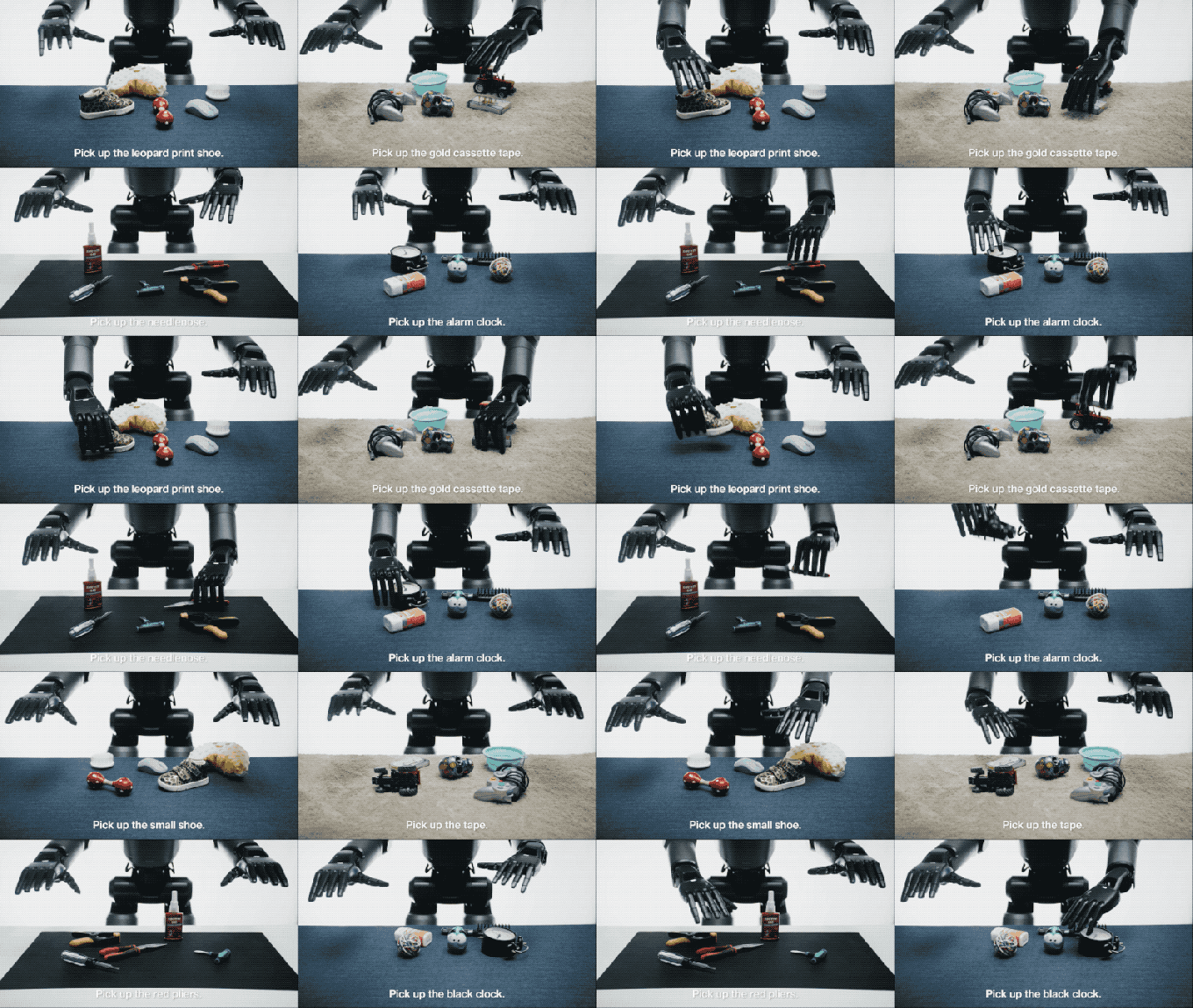
Ideally, one should be able to instruct a robot to perform a task simply by speaking. Helix aims to make this a reality, according to Figure. This platform seeks to integrate visual and language capabilities seamlessly. Once a natural language command is received, the robot assesses its surroundings and executes the task.
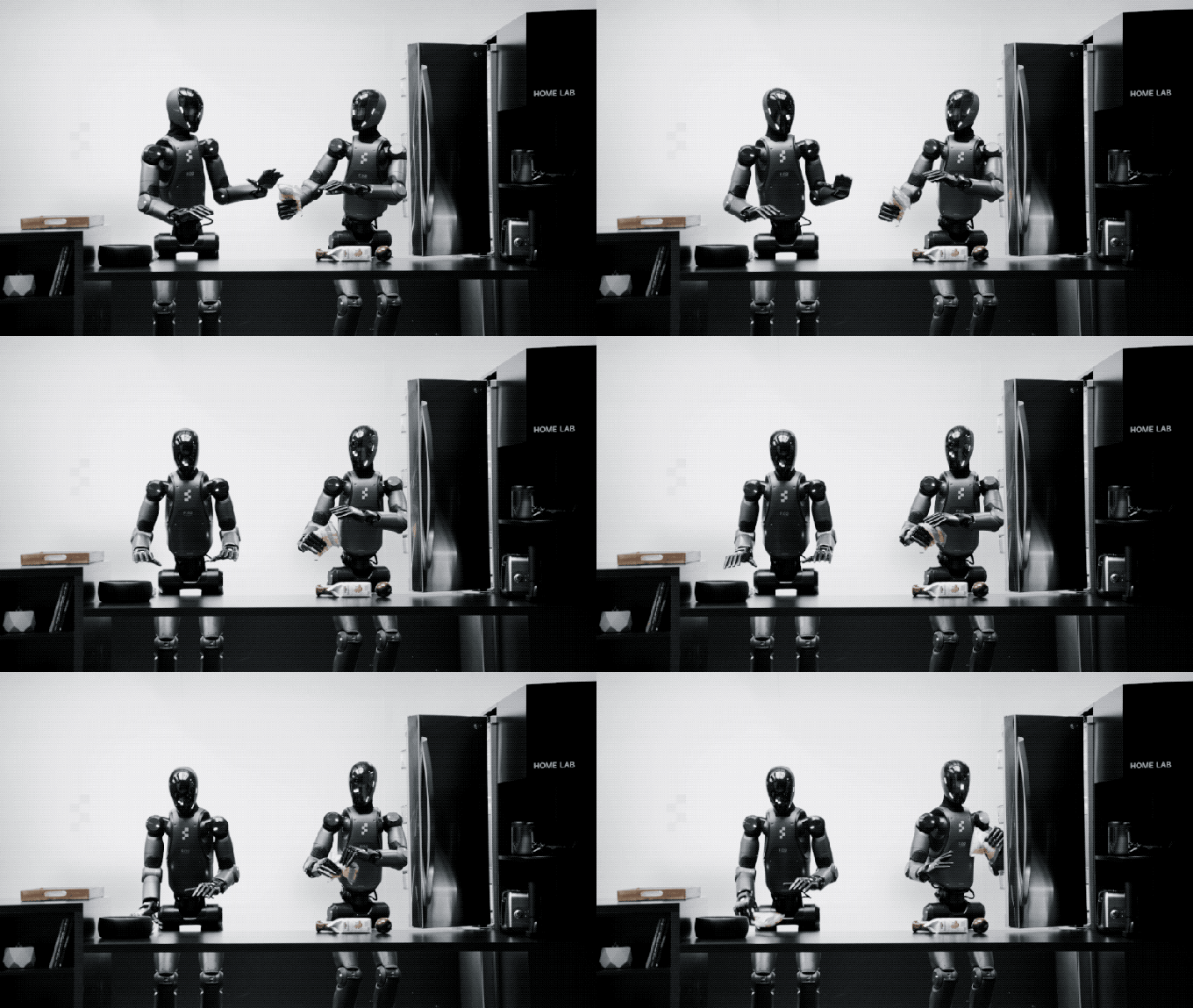
Figure illustrates the functionality with scenarios like, “Pass the bag of cookies to the robot on your right” or “Take the bag of cookies from the robot on your left and store it in the open drawer.” These scenarios require two robots collaborating, as Helix is designed to manage two robots simultaneously, with one aiding another in various household duties.
To highlight the potential of the VLA, Figure has been showcasing the work its 02 humanoid robot can perform in domestic environments. Homes present unique challenges for robots due to their lack of the uniformity and predictability found in factories and warehouses.
Significant obstacles such as the complexities of learning and control hinder the implementation of advanced robot systems in domestic settings. Additionally, the pricing, often in the range of five to six digits, explains why home robots have not become a primary focus for many humanoid robotics companies. Typically, the strategy involves engineering robots for industrial clients to enhance dependability and reduce expenses before addressing household applications. The discussion around household chores is likely still a few years away.
During a 2024 tour of Figure’s Bay Area facilities, Adcock demonstrated the various capabilities of their humanoid robot within a home context. At that time, it seemed that home-related research was not the main priority, with Figure concentrating on workplace pilot projects with companies like BMW.
With the recent introduction of Helix, Figure emphasizes that homes should be a distinct area of focus. This setting presents a challenging environment to trial such training models. For instance, teaching robots to perform intricate tasks in kitchens exposes them to a wide spectrum of actions in varying contexts.
“To be effective in household settings, robots must create intelligent new behaviors on demand, particularly for items they have never encountered before,” states Figure. “Currently, instilling even one new behavior in robots demands significant human input, either through extensive manual programming or countless demonstrations.”
Relying on manual programming is not scalable for home environments due to the sheer number of variables. Each kitchen, living room, and bathroom can differ significantly. The same applies to the utensils used for cooking and cleaning. Moreover, messes are often created, furniture is rearranged, and various lighting conditions comprise additional challenges. Such methodologies prove to be prohibitively time-consuming and expensive—although Figure certainly possesses the financial resources.
The alternative approach is extensive training. Robotic arms designated for picking and placing items in controlled settings often utilize this strategy. However, what remains unseen are the hundreds of hours of practice that go into ensuring a robust demo that can handle diverse tasks effectively. A robot needs to have repeated the action of picking an object correctly hundreds of times to do so accurately on the first try.
As is the case with much in the field of humanoid robotics today, the Helix project is still in its nascent stages. It’s important to recognize that considerable behind-the-scenes work contributes to the polished, concise videos that accompany such announcements. Essentially, this latest update serves as a recruitment initiative to enlist more engineers to help advance the project.
Compiled by Techarena.au.
Fanpage: TechArena.au
Watch more about AI – Artificial Intelligence

