

In the frantic race to integrate humanoid robots into workplaces, safety considerations often take a backseat. Prominent companies, from retail giants like Amazon to automotive leaders such as Mercedes and BMW, are making headlines with humanoid pilot projects in factories and warehouses, while discussions about worker safety frequently get overshadowed by the excitement surrounding these advancements.
A robotics company from the Bay Area aims to address this gap in safety considerations.
On Tuesday, Figure AI announced its initiative to establish a Center for the Advancement of Humanoid Safety, an internal division dedicated entirely to improving safety standards in humanoid robotics. Rob Gruendel, previously a safety engineer with Amazon Robotics and now leading this project, shared the news through a LinkedIn post.
Past approaches to factory and warehouse safety involved enclosing large, heavy robots within protective cages. More modern solutions utilize advanced technologies such as computer vision, software developed by Veo Robotics, and a specially designed safety vest from Amazon aimed at preventing collisions between robots and humans.
While Amazon’s innovative vest is intended for in-house use and unlikely to see application beyond its fulfillment centers, the company still relies on protective cages for several robots. Veo Robotics was acquired by Symbotic in 2024, which has since taken charge of Walmart’s robotics division.

Although humanoid robots are valued for their flexibility, multifunctionality, and compatibility with existing brownfield warehouses, they also bring a fresh array of safety challenges. A primary advantage of the humanoid design is its potential to collaborate with human workers, yet these large, metallic bodies navigating freely within industrial settings could lead to accidents and injuries through unintended collisions with human coworkers.
Organizations that oversee workplace safety, such as the Occupational Safety and Health Administration (OSHA), still have significant work ahead in aligning regulations with advancements in automation safety. Currently, there are no “distinct OSHA standards for the robotics industry,” as noted by the federal agency. This issue needs to be proactively addressed, particularly with increasing deployment of humanoids.
Figure AI is concentrating on bridging that gap.
“One of our recent achievements has been the establishment of a formal plan with our OSHA-recognized independent testing laboratory to certify our robot’s battery, functional safety control system, and electrical system to industrial standards,” Gruendel announced.

Since becoming the Chief Technology Officer of Agility Robotics in 2023, Melonee Wise has made humanoid safety a top priority.
“With any humanoid robot operating in this context, the safety protocols are not straightforward,” Wise remarked during a humanoid panel at last year’s Automate conference. “For example, Tesla’s Optimus doesn’t have a clear stop mechanism. Many humanoid robots lack this feature, which contradicts safety standards. It’s evident that a number of companies prioritize other aspects over this concern.”
The establishment of the Center for the Advancement of Humanoid Safety marks a critical milestone for Figure AI.
“We understand that the general public often relies on technology specialists to evaluate whether an AI-driven robot can be safe,” Gruendel expressed. “Our aim is to communicate directly with our customers. Our testing will focus on assessing the robot’s stability at rest and in motion, detecting humans and four-legged pets, ensuring safe AI behaviors, and implementing navigation strategies to avert injuries. We’re open to feedback from our customers on enhancing the safety testing of Figure 02 and beyond.”
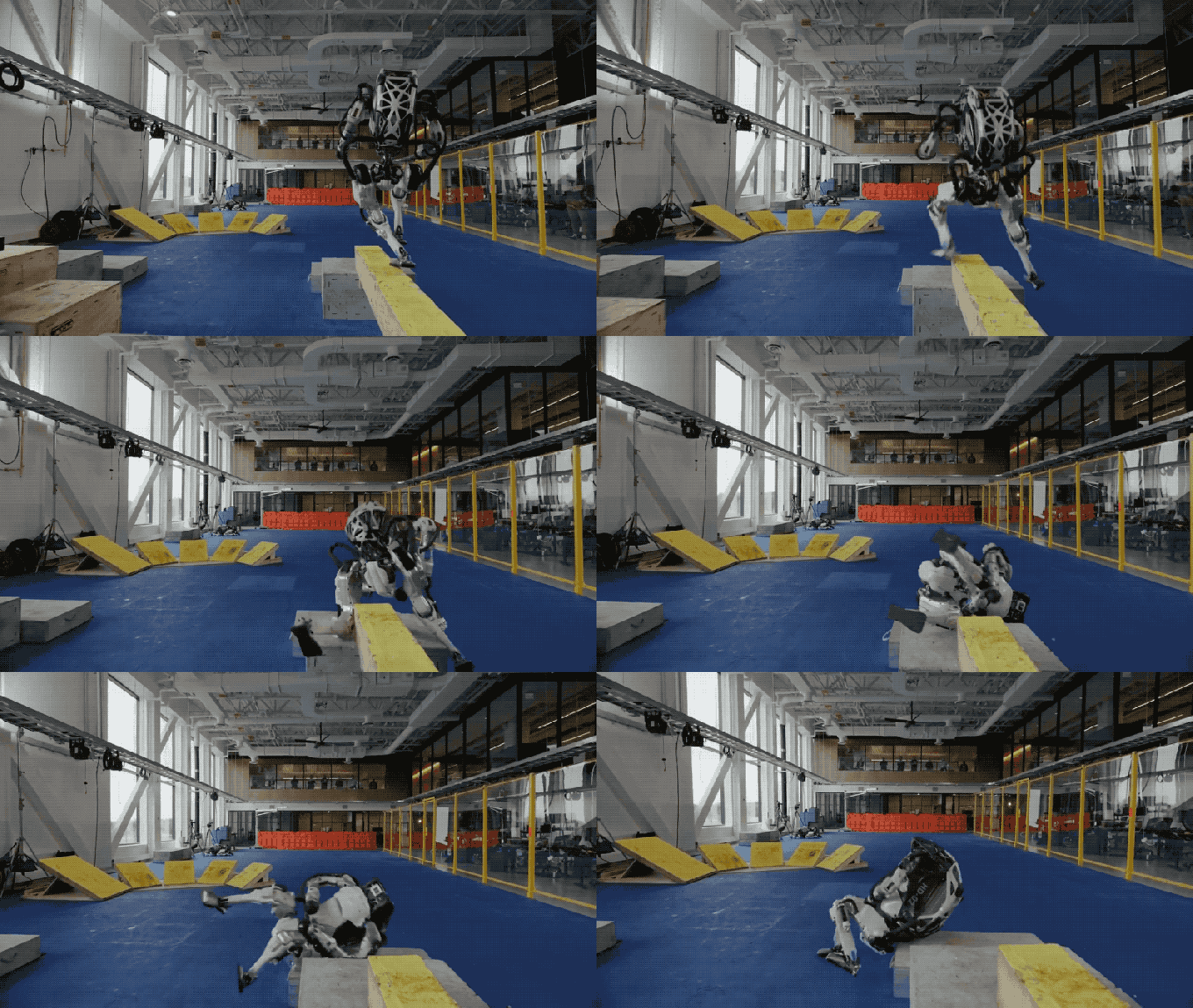
Figure AI intends to release quarterly updates to provide greater transparency about their processes. These reports will detail testing methods and solutions for identified safety risks.
“We will document both our achievements and setbacks,” Gruendel stated.
Ultimately, these insights could help bridge the safety gaps and prepare the industry for an exciting new chapter: integrating robots into domestic environments.
As the push for humanoid robots in homes intensifies, establishing robust safety standards will become increasingly vital.
Compiled by Techarena.au.
Fanpage: TechArena.au
Watch more about AI – Artificial Intelligence

