
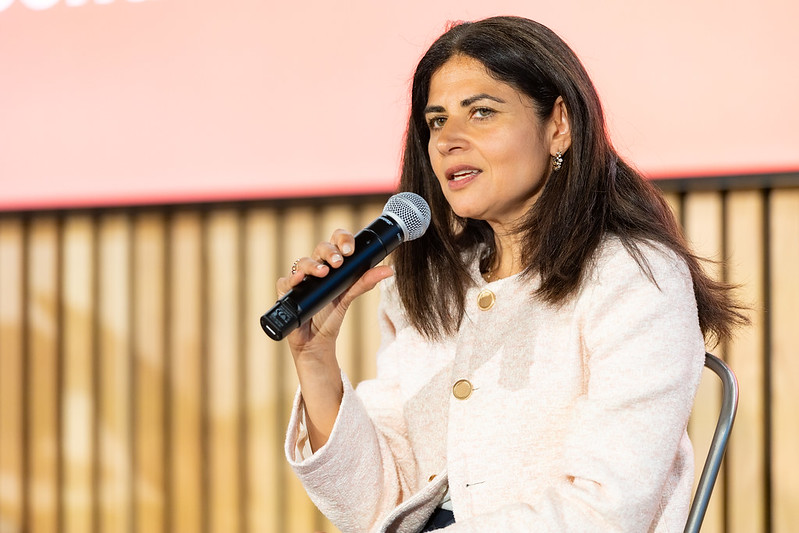
Sonali De Rycker, a prominent venture capitalist and general partner at Accel, expresses optimism regarding the potential of Europe in the artificial intelligence (AI) domain, though she cautions against regulatory overreach that could impede progress. Speaking at a recent TechCrunch StrictlyVC event in London, she highlighted that Europe possesses all necessary elements for a thriving AI ecosystem: driven entrepreneurs, access to capital, skilled talent, and strong educational institutions. However, what remains absent is the capacity to fully harness and scale that potential.
One significant barrier, according to De Rycker, is Europe’s intricate regulatory framework and the implications of the controversial Artificial Intelligence Act. While she acknowledges the importance of regulation in high-stakes industries such as healthcare and finance, she worries that the AI Act’s expansive scope may unintentionally stifle innovation. The heavy penalties stipulated could hamper startups during critical formative stages.
De Rycker believes that now is a crucial moment for Europe to assert its autonomy, especially as geopolitical dynamics shift and U.S. support becomes less certain. She notes that fostering self-sufficiency is essential for the continent to thrive in the digital space.
To advance, she points to the “28th regime,” an initiative designed to unify business regulations across the EU. Such a framework could eliminate the current complexities arising from diverse labor laws and corporate standards across member states, thus enabling a more streamlined and conducive environment for startups.
De Rycker observes a gradual shift in Europe’s innovation landscape, with cities like Zurich, Munich, Paris, and London establishing vibrant ecosystems backed by esteemed academic institutions and seasoned entrepreneurs. Accel’s investments across over 70 European cities provide her with insights into this fragmented yet promising tech environment.
However, she draws attention to a notable disparity in the adoption of AI between Europe and the U.S. where American firms demonstrate a greater willingness to experiment and invest in early-stage technologies. Profoundly aware of this competitive landscape, Accel has opted to focus on applications rather than foundational AI models, which often require heavy capital and diverge from venture-backed business structures.
Prominent examples from Accel’s portfolio, such as Synthesia and Speak, illustrate how AI can innovate traditional markets and create new business paradigms. De Rycker likens the current era to the infancy of mobile technology, suggesting an unprecedented expansion of market opportunities.
Ultimately, she views the current landscape as both a challenge and a unique opportunity. If Europe over-regulates, it risks missing out on vital innovation, crucial not only for competing in AI but for the broader technology sector. As geopolitical uncertainties mount, Europe must embrace its potential, striking a balanced regulatory approach to lead on the global stage. De Rycker posits that European founders already demonstrate competitiveness akin to their U.S. counterparts, highlighting successful companies such as Supercell and Spotify as testament to Europe’s capabilities.
Fanpage: TechArena.au
Watch more about AI – Artificial Intelligence
