
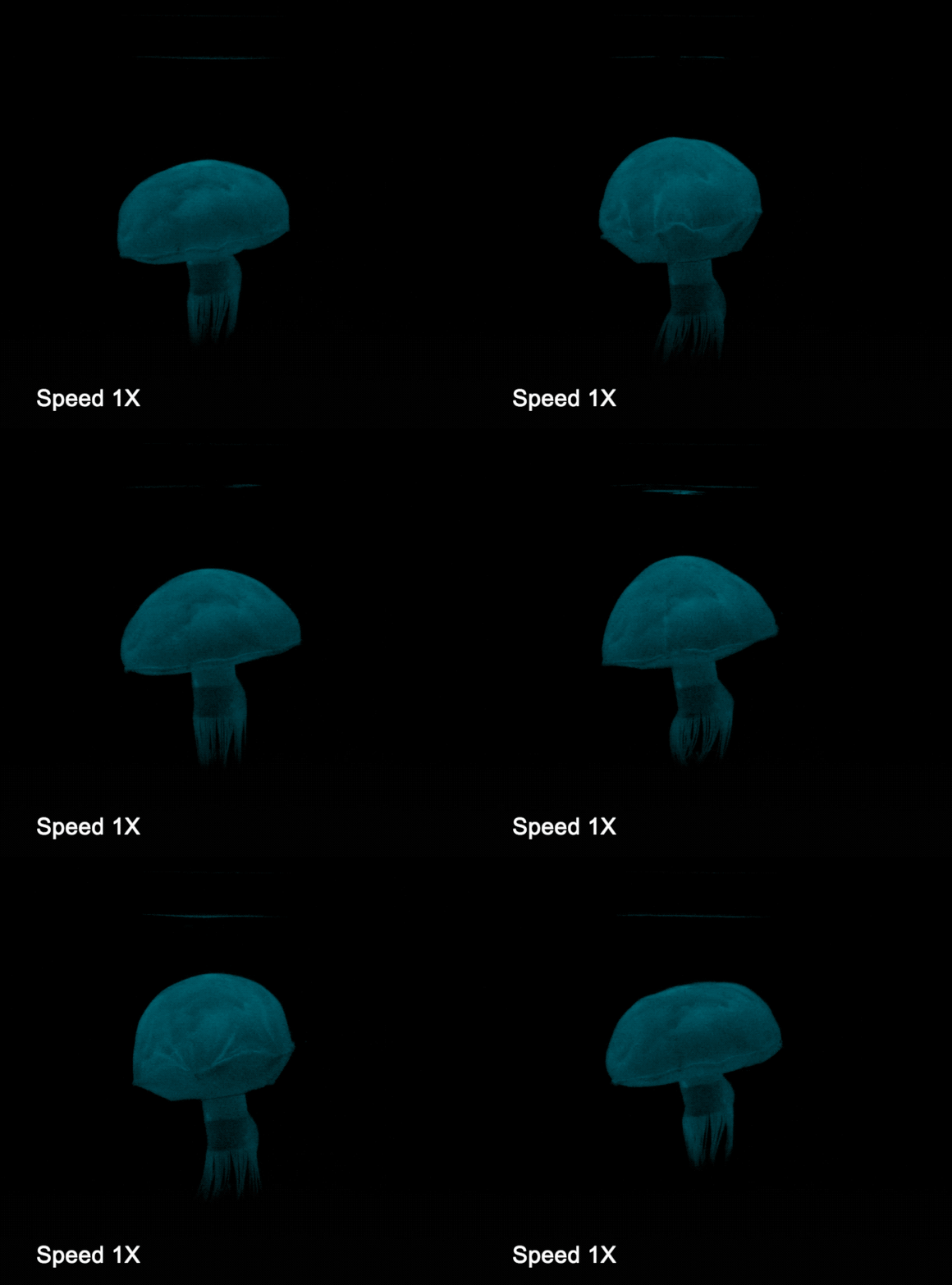
On Monday, researchers from Cornell University demonstrated two bio-inspired robots powered by a hydraulic fluid-based battery. This redox flow battery (RFB) mimics natural processes by releasing electrolytic fluids that dissolve to generate energy through a chemical reaction.
The showcased robots include a modular worm and a jellyfish, developed by the Cornell Engineering team. According to the university, the batteries that drive these robotic systems harness embodied energy, a method that integrates power sources within the machine’s structure to minimize weight and cost.
Professor Rob Shepherd, who specializes in mechanical and aerospace engineering, explains the innovative technology: “Hydraulic-powered robots are common, but we are the pioneers of utilizing hydraulic fluid as a battery, which lessens the robot’s overall weight by serving dual roles—supplying energy and generating movement.”

This novel battery technology has not only enhanced the speed and agility of the robots but has also allowed the jellyfish robot to operate for up to 90 minutes. The design is built upon prior work from the institution that led to the creation of a lionfish-inspired bio-robot. At that time, the researchers described the circulating fluid as “robot blood,” suggesting the battery functions like a “robot heart.”
The jellyfish’s RFB features a flexible tendon that enables it to propel upward by bending into a bell shape; when the shape is relaxed, the robot descends. Videos of the jellyfish in action reveal movements that closely resemble those of natural jellyfish gliding through water.

Conversely, the worm robot is assembled from modular segments akin to larger snake-like robots. Each segment is equipped with a motor and a tendon actuator, which expands and contracts to facilitate movement.
The team acknowledges that transitioning from aquatic to terrestrial environments introduces distinctive challenges, particularly since underwater robots do not necessitate a rigid skeletal framework.
“This reflects the evolutionary process of life on land,” Shepherd notes. “It starts with fish, then progresses to simpler organisms supported by the ground. The worm is a basic organism, yet it boasts more degrees of freedom.”
Compiled by Techarena.au.
Fanpage: TechArena.au
Watch more about AI – Artificial Intelligence

