

The rapidly viral AI “agent” platform Manus, developed by the Chinese startup Butterfly Effect, has inadvertently brought another AI tool known as Browser Use into the spotlight.
Browser Use is designed to enhance website accessibility for agentic applications that facilitate tasks on behalf of users. Over the past week, it has seen a remarkable increase in popularity, with daily downloads skyrocketing from approximately 5,000 on March 3 to 28,000 by March 10, according to co-creator Gregor Zunic in a conversation with TechCrunch.
“These last few days have been quite extraordinary,” Zunic shared via DM. “We have become the most trending repository on GitHub, accumulated a significant number of downloads, and all of that translates into substantial usage statistics.”
What has triggered this surge? A post discussing how Manus utilizes Browser Use attracted over 2.4 million views and numerous reshares on X. Notably, Browser Use is a key component that Manus uses to perform various tasks, including navigating site menus and completing forms.
Zunic co-founded the company behind Browser Use with Magnus Müller last year at ETH Zurich’s Student Project House accelerator. They envisioned web agents — autonomous agents designed to navigate websites and web applications — as a major innovation for 2025.
“What began as casual discussions over lunch transformed into a challenge: let’s create a small project, post it on Hacker News, and see what unfolds,” Zunic recounted. “We assembled a minimum viable product in just four days, launched it, and it took off — instantly becoming number one. Since then, it has been a tremendous success.”
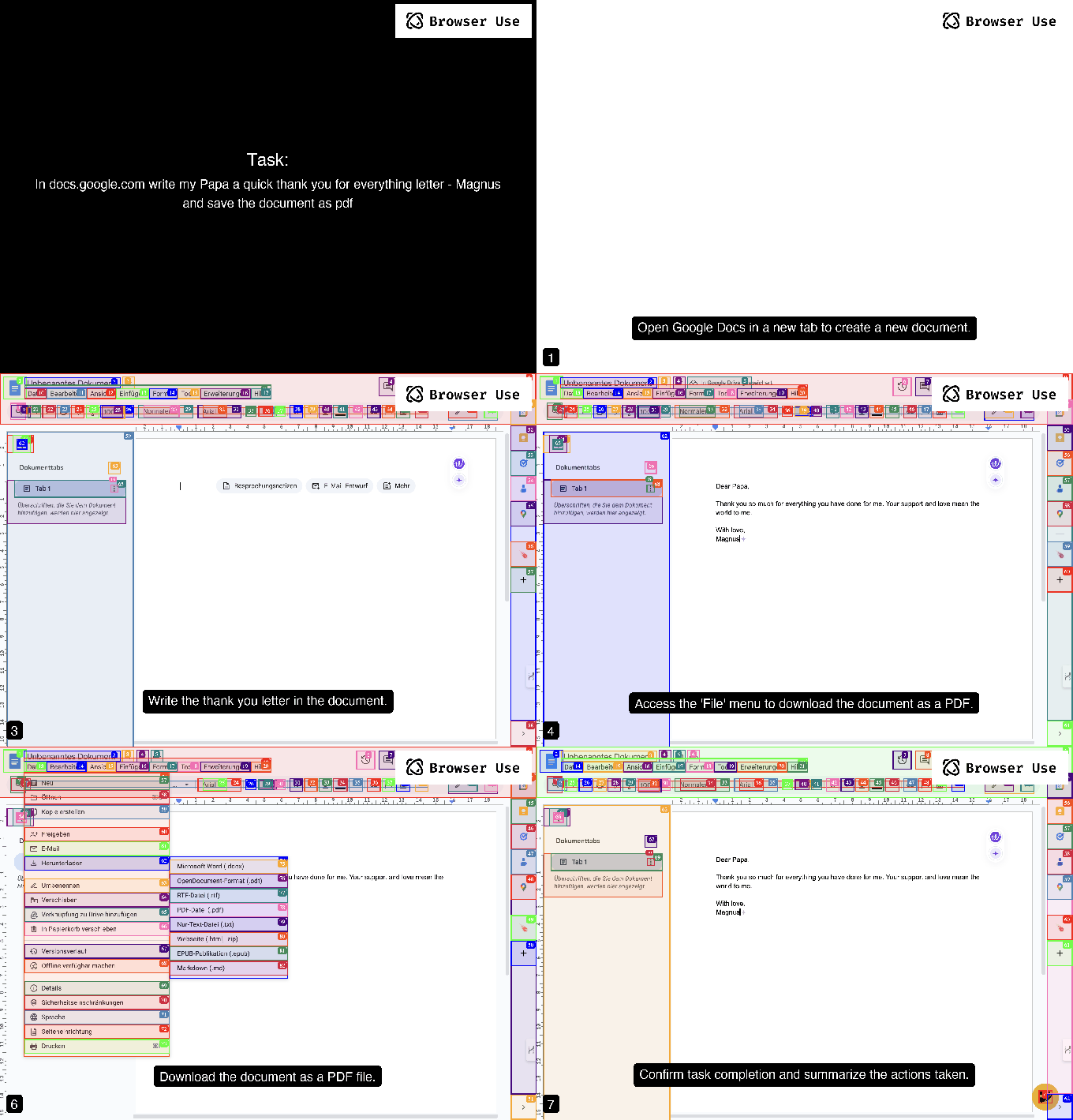
Browser Use efficiently extracts elements from websites—such as buttons and widgets—to facilitate smoother interactions for AI models. The tool can adeptly handle multiple browser tabs, execute tasks like file management and database operations, and manage both mouse and keyboard inputs.
The company Browser Use offers managed plans for a fee, alongside a complimentary self-hosted version of its software. The latter has seen a phenomenal rise in popularity following the launch of Manus.
Zunic reveals that he and Magnus are aiming to “provide a cornerstone” for developers eager to partake in the burgeoning web agents sector.
“Our goal was to build a foundational layer that can support the development of browser agents by anyone,” Zunic said. “We believe there will be more agents on the internet than humans by the conclusion of this year.”
While this might sound overly optimistic, numerous analysts predict substantial growth in the AI agent market in the near future. According to Research and Markets, this sector is expected to reach $42 billion by 2029. Additionally, Deloitte forecasts that half of companies utilizing AI will deploy AI agents by 2027.
Beyond the Manus effect, the timing of Browser Use appears to be exceptionally advantageous.
Compiled by Techarena.au.
Fanpage: TechArena.au
Watch more about AI – Artificial Intelligence

