

YouTube Shorts is now incorporating Google DeepMind’s advanced video model, Veo 2, enabling creators to produce AI-generated video clips for their content.
Veo 2 serves as Google’s answer to Sora, the text-to-video generator developed by OpenAI. Previously, YouTube, a subsidiary of Google, permitted creators to utilize text prompts to create AI backgrounds for their Shorts through a feature named Dream Screen. However, with the introduction of Veo 2, creators can now generate independent video clips to enhance any of their Shorts.
In a blog entry from YouTube’s Director of Product, Dina Berrada, it was noted that these AI functionalities will operate with enhanced speed.
“Veo 2 has a superior understanding of real-world physics and human motion, resulting in outputs that are more intricate and lifelike,” Berrada explained. “You can even choose styles, lenses, or cinematic effects, making Dream Screen an enjoyable and engaging way to showcase your creativity.”
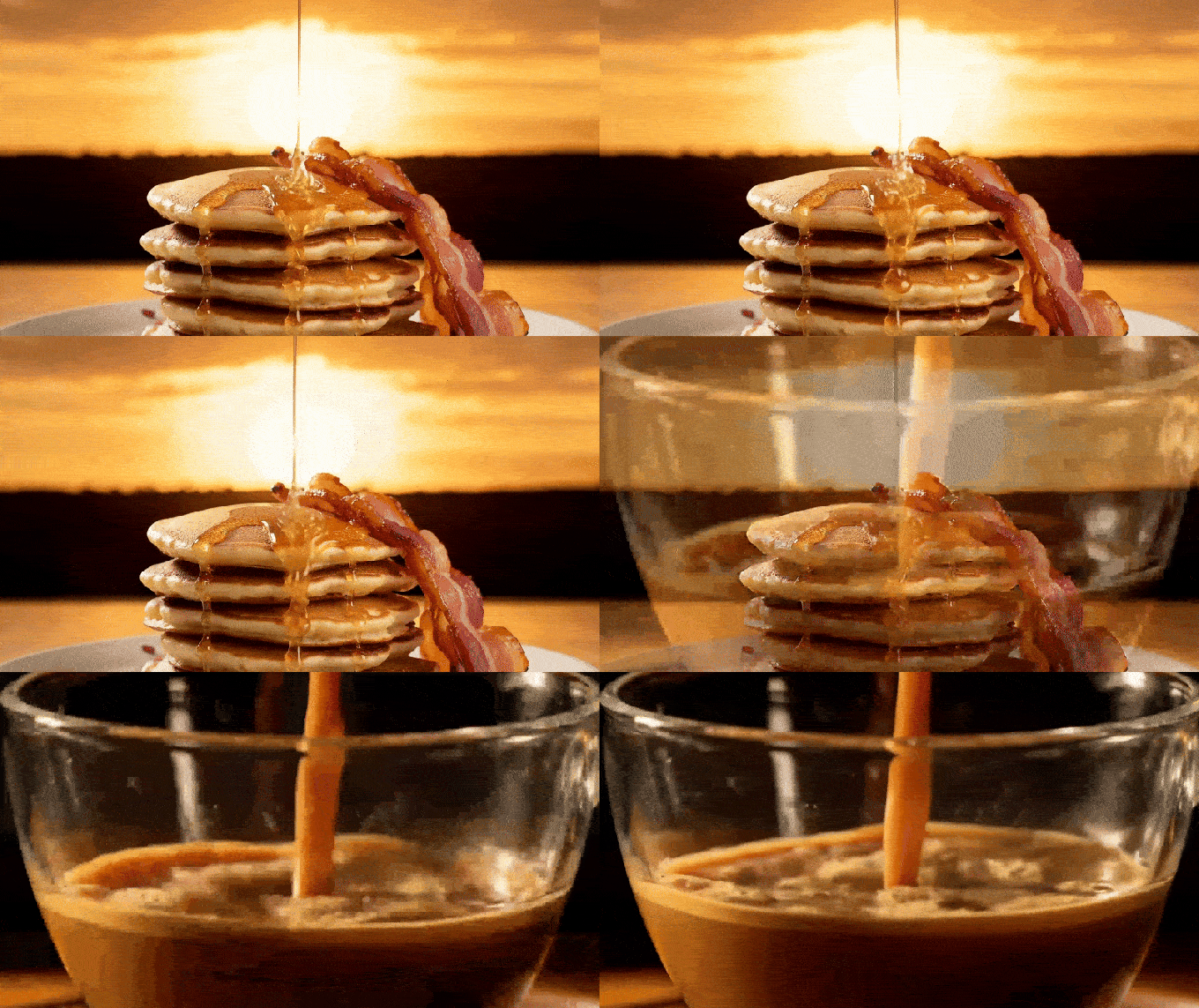
To signify that these videos have been created using AI, the DeepMind SynthID tool will be employed, which watermarks and identifies AI-generated materials. YouTube has also indicated that these videos will be marked clearly as AI-generated — however, these labels may not entirely eliminate the risks of disseminating synthetic content that could potentially mislead audiences.
For creators looking to leverage Veo 2 within YouTube Shorts, they can access the Shorts camera, select the Green Screen option, and then proceed to Dream Screen where they can enter a text prompt to generate a video.
This feature will be available starting Thursday for creators located in the U.S., Canada, Australia, or New Zealand, with plans for wider availability in the future.
Compiled by Techarena.au.
Fanpage: TechArena.au
Watch more about AI – Artificial Intelligence

