
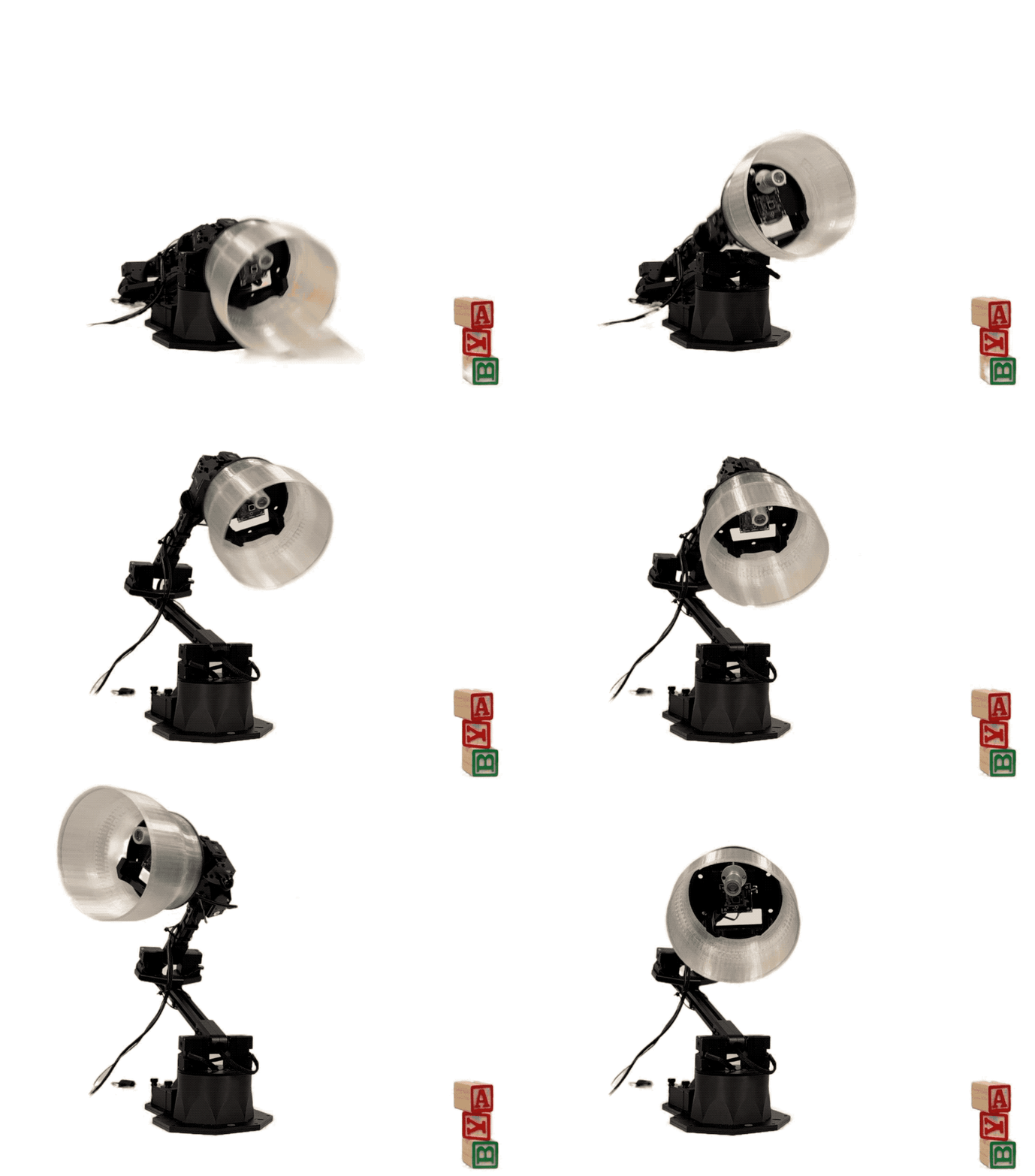
In the previous month, Apple shared additional insights into its consumer robotics initiatives through a scholarly article, which emphasizes that features such as expressive movements are crucial for enhancing interactions between humans and robots. The paper opens with, “Similar to many animals,” and continues, “humans are exceptionally responsive to motion and nuanced alterations in movement.”
To exemplify this idea, Apple draws inspiration from Pixar, a company that was also established with the support of the late Steve Jobs. Since Pixar made its debut with a namesake short film in 1985, the Luxo Jr. lamp has been the beloved mascot of the animation studio. In its research, Apple chose to utilize a lamp as its own “non-anthropomorphic” representation. While lamps lack any distinct human-like characteristics, they can be designed to exhibit familiar behaviors.

The research paper highlights, “To facilitate more natural interactions between robots and humans, the design of robot movements should incorporate expressive elements such as intention, attention, and emotions, in addition to conventional functional aspects like task completion and efficiency.”
Avideo released alongside the paper exhibits some of these expressive movements. Unsurprisingly, many of them bear resemblance to those found in Pixar’s animations, utilizing structures where the lampshade represents the head and the arm symbolizes the neck.
The most captivating segment of the video, in terms of potential product use, features a user asking the robot a question. In its simplest form, this unnamed lamp robot behaves like an animated version of smart speakers like the HomePod or Amazon Echo, responding in Siri’s voice when prompted by the user facing the lamp.
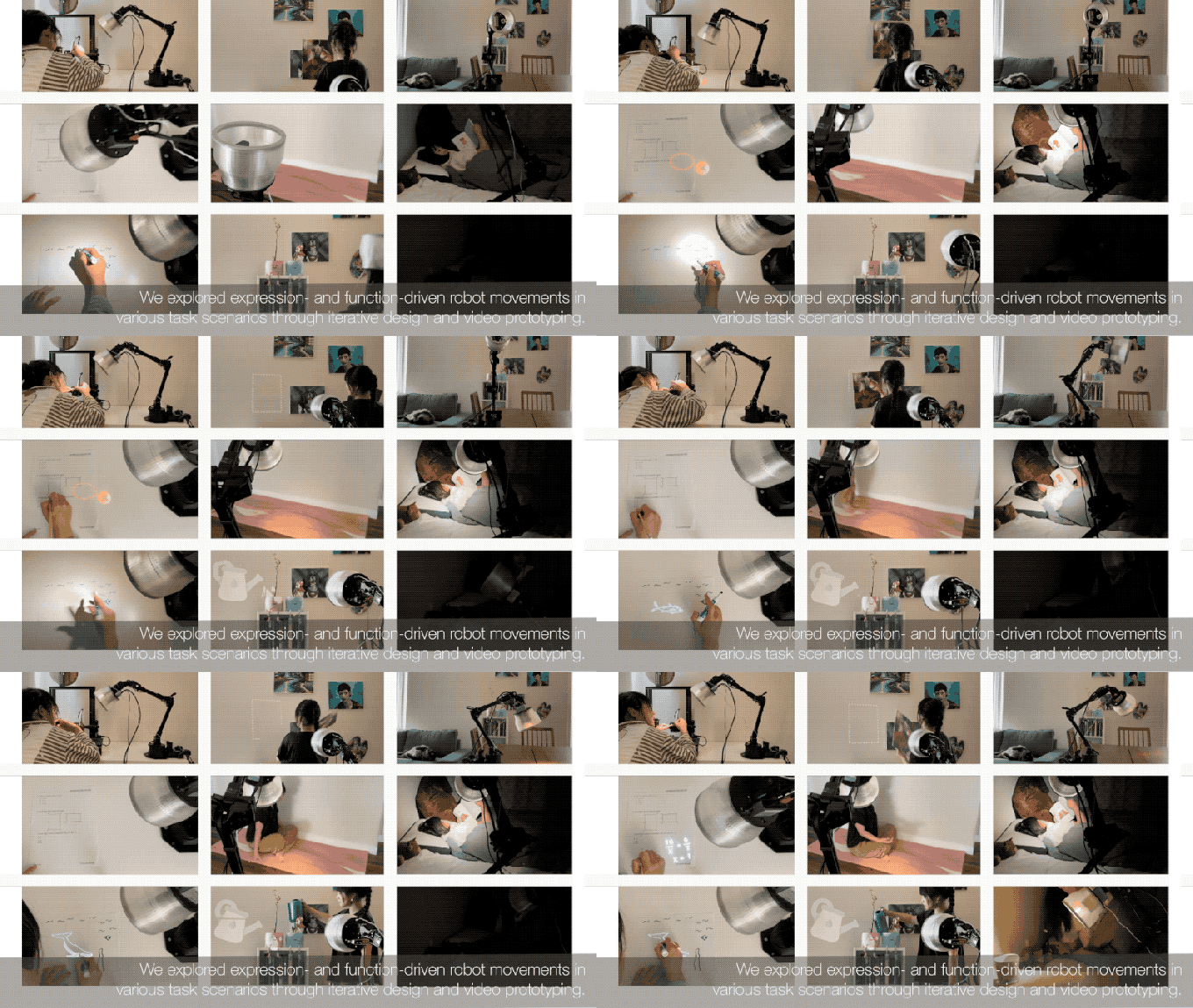
A split-screen presentation underscores the significance of expressive movements. When asked about the weather, one version simply provides the answer, while another turns its head to glance out the window, suggesting it may draw insights from the view. Though a basic illustration, it emphasizes how even minor movements resonate with our primal tendencies towards pareidolia. The familiarity of these expressive actions fosters a connection between humans and objects.

This research emerges as Apple purportedly accelerates its consumer robotics ventures, aiming for the anticipated launch of a more sophisticated smart home system. It’s evident how these findings could enhance the expressiveness of a robotic home hub, resembling Amazon’s approach with its Astro robot. However, the focus on a non-anthropomorphic design hints that Apple may pursue an even less human-like robot compared to Amazon’s.
Speculation about the forthcoming launch has characterized the hub as “a robotic arm equipped with an iPad.” It’s feasible to envision how the lamp design could fit into this concept. Naturally, Apple’s consumer robotics division appears to be in the research stage, and numerous developments could occur before full-scale production, including significant alterations in design or the potential cancellation of the project before it sees the light of day.
Compiled by Techarena.au.
Fanpage: TechArena.au
Watch more about AI – Artificial Intelligence

