
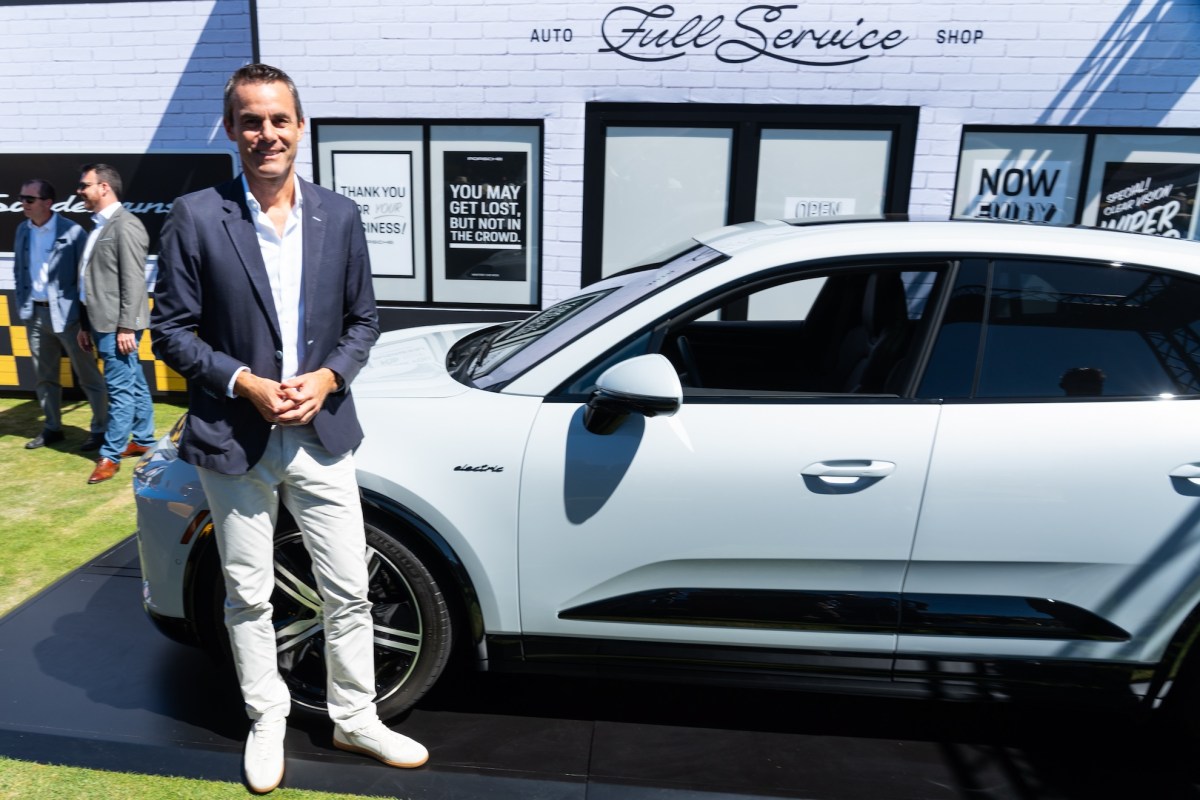
Under the warm embrace of the Californian sun during a conversation at the Quail, a high-profile event in the Monterey Car Week, Timo Resch gleams both literally and metaphorically. As the newly appointed CEO of Porsche Cars North America (PCNA) since last November, Resch finds himself in an enviable position of success and growth.
The company has recently celebrated its most successful quarter, witnessing a 13% increase in sales for the second quarter compared to the same timeframe in 2023. Porsche is riding a wave of consistent growth, facing a pivotal moment as it leans into electrification amidst an uncertain market.
On the horizon for Porsche is the debut of their second electric vehicle (EV), the battery-powered iteration of the Macan SUV, marking the brand’s most accessible model yet. This will soon be succeeded by an electric variant of the 718, Porsche’s most economical sports car. This comes along with the latest generation of the 911, now available as a hybrid, and an updated Panamera boasting enhanced power and range in its plug-in hybrid configuration.
Perched between the striking vision of a white Macan Electric and a vibrant purple Taycan Turbo GT, Resch described the current phase as “the most significant reshuffling of our product lineup in history.” Despite the electrification efforts seeing a slight dip in intensity, Porsche remains committed, even as it recently adjusted its ambitious goal of an 80% electric fleet by 2030, citing shifting consumer demand as per a recent Reuters interview.
Resch maintains a realistic outlook, emphasizing Porsche’s aim to cater to consumer desires, “The market and our customers will guide us. Offering options and choices, that’s the essence of the Porsche ethos,” he remarked.
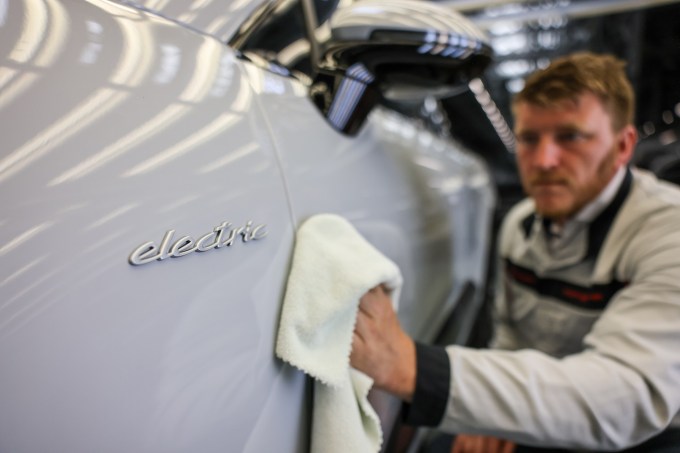
The electric Macan serves as a litmus test, joining rather than replacing its combustion-engine sibling. “For now, the Macan Electric will share the spotlight with the Macan ICE (internal combustion engine),” Resch explained.
In the initial stages, both electric and gasoline versions of the Macan will be presented side by side in showrooms, each vying for consumer attention.
While Resch kept actual pre-order figures under wraps, he acknowledged the variability in interest across regions, “Electrification’s appeal varies significantly across the U.S. Some states exhibit strong interest and infrastructure, while others are more gradual,” he noted.
The electric Macan will premiere at Porsche’s American Experience Centers in Los Angeles and Atlanta, offering firsthand encounters to gauge if the vehicle lives up to its anticipation. “Both our dealers and customers are eagerly awaiting to get behind the wheel and have their experience,” Resch shared.
Software Challenges
Addressing the “finally,” Resch emphasized the tumultuous journey the electric Macan endured due to software development hurdles. These issues delayed its release, affecting the vehicle that lays the groundwork, the PPE platform, also destined for the upcoming Audi Q6 E-Tron.
Internal software development has been a continuous headache for the Volkswagen Group, Porsche’s parent company. The difficulties around the Cariad division, marked by internal delays, have led to a strategic $5 billion collaboration with Rivian, aiming to leverage the startup’s software prowess.
Porsche has been integrating its software with tech giants like Google and Apple. In contrast to General Motors’ approach of minimizing smartphone integration, Porsche is embracing deeper connections with mobile devices.
“While we’ll continue to develop our inherent infotainment systems, offering user-friendly and fully functional interfaces, we’re also open to integrating additional options for our customers,” Resch stated.
Embracing Apple and Google
Porsche’s direction includes integrating native Android apps and enhancing Apple CarPlay integration. This collaboration aims to allow iPhones to interact not just with the central touchscreen but extend control to the car’s gauge cluster.
“Our longstanding relationship with Apple signifies our mutual focus on customer-centric innovations. Our collaboration is driven by where the industry is headed, without locking us into a singular path,” Resch affirmed.
The preference towards Apple does not deter from the fundamental principle of providing choice, based on a significant portion of Porsche’s user base being Apple enthusiasts.
When prompted about the political landscape surrounding EVs in the U.S., Resch paused, reflecting before reiterating the importance of choice, “Our philosophy is to always offer variety,” he concluded. “It’s about providing an array of options so customers can find what best suits their preferences, a practice Porsche and the automotive industry at large have long upheld.”
Compiled by Techarena.au.
Fanpage: TechArena.au
Watch more about AI – Artificial Intelligence
